
Persian Rug Cleaning
on the Upper East Side
Deep expertise in Persian rug construction and dyes, cleaned according to region and fiber.
Arrange a pickup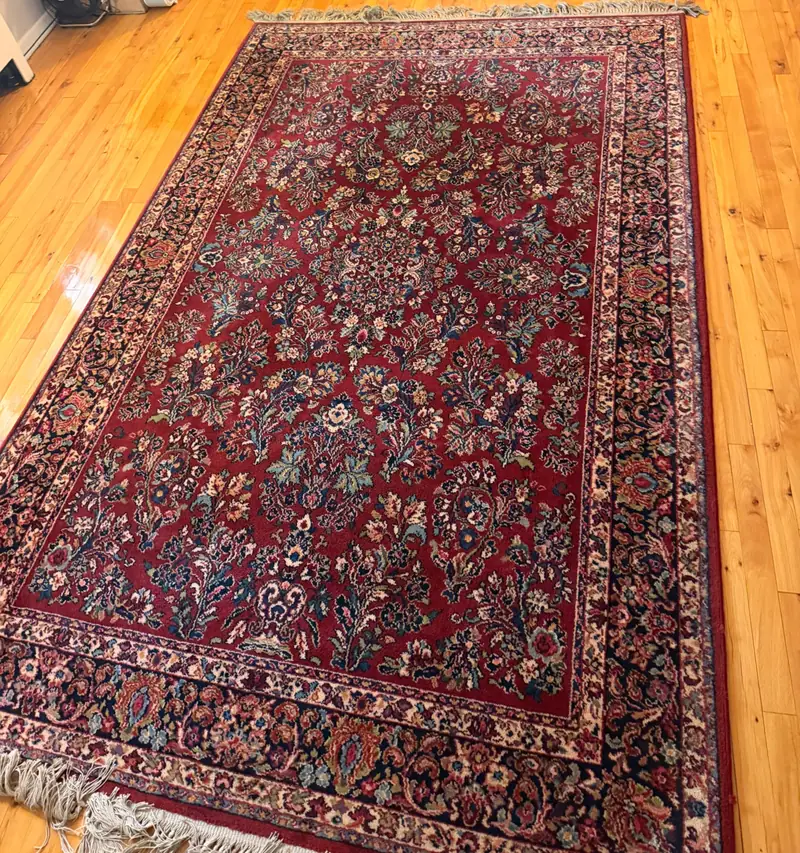 PHOTOGRAPHED BY OUR TEAM
Care begins with
understanding.
Persian rugs are among the world's most coveted textiles, each reflecting the tradition of its region, from the intricate florals of Isfahan to the bold geometry of Heriz. Our cleaning approach accounts for the specific knot density, dye type, and wool or silk composition of each Persian piece. We work to lift embedded soil and bring back color while preserving the rug's character.
We discuss the condition, recommended treatment and expected outcome with you. The appropriate method is selected after inspection; not every treatment is suitable for every rug.
Persian Rug Cleaning on the Upper East Side
A Persian rug announces where it was made in the way it is woven, and the weave decides how it is washed, so identification comes first. A Kerman is an urban weave with soft, finely knotted wool that calls for a light hand. A Bidjar, by contrast, is woven so tight that it stands up on its own, and bending one can crack it, so it travels rolled from the first minute to the last; a Heriz is heavy too, and more forgiving on the journey. Where the tests call for it, the dyes are fixed in place, the rug is immersed for its full bath and washed by hand, and the rinsing is repeated until the last of it runs clear, because residue in a dense weave pulls soil back and the piece dulls again within months. It dries flat with moving air drawn over it, and the fringe is given its own wash and finished by hand. Natural dyes explain a good part of what people prize in these rugs: madder gives the reds and indigo the deep blues, and every shade settles at its own depth in the wool. Dye lots matter to a collector as well, since two rugs from the same region can differ in tone because the madder root itself varies from harvest to harvest, and a wash that respects the dyes preserves that variation. A wash draws the soil out of those colors and leaves each dye where the weaver set it; it cannot deepen what years of light have thinned, and we say so plainly once it shows. Where a piece has already lost color, we measure how much and tell you before the bath, so the decision to proceed is yours with open eyes. The carry matters here as well, since three in five homes are reached by elevator and the desks that run the service cars often book them by the hour, and a large Persian rolled for travel can be an awkward passenger in a car sized for people. Tell us the size, the floor and the car's schedule when you call, and if the piece is a Bidjar, tell us that too.
- 60%of homes in elevator buildings
- 40%built before 1940
- 16floors in the median home's building
A careful
consideration.
- 01Region-specific cleaning protocols
- 02Natural dye stabilization
- 03Full immersion hand-wash
- 04Multi-stage rinsing
- 05Flat drying with air circulation
- 06Hand-finished fringe cleaning
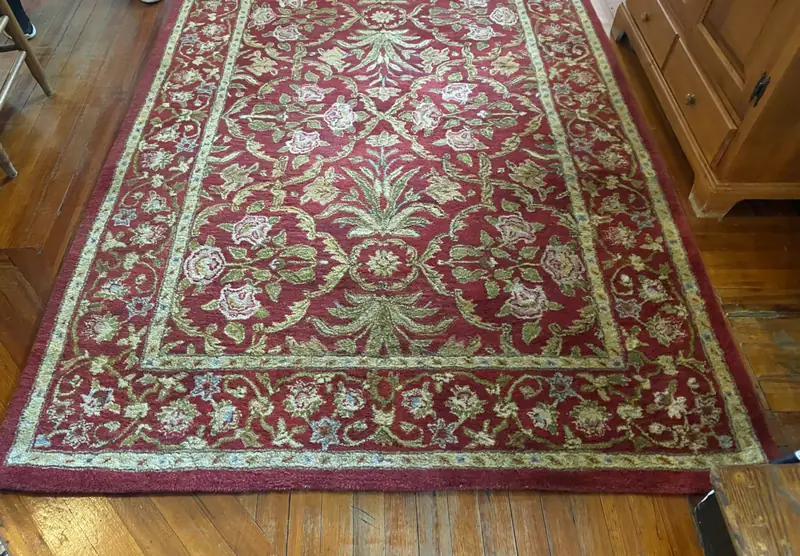
Time for a closer look?
- Color fading from sun exposure
- Deep-set soil in dense pile
- Fringe discoloration
- Food or beverage stains
- Pet-related damage
- Dust mite accumulation
Let's care for
something remarkable.
A favorite piece. A family heirloom.
A room that feels like you again.