
Persian Rug Cleaning
in Manhattan
Deep expertise in Persian rug construction and dyes, cleaned according to region and fiber.
Arrange a pickup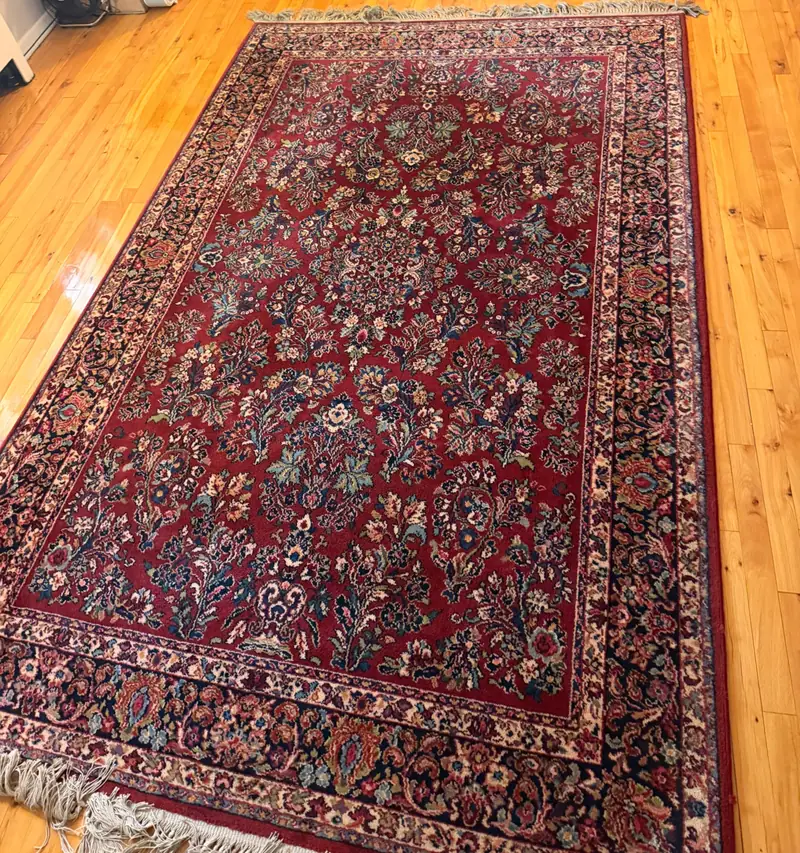 PHOTOGRAPHED BY OUR TEAM
Care begins with
understanding.
Persian rugs are among the world's most coveted textiles, each reflecting the tradition of its region, from the intricate florals of Isfahan to the bold geometry of Heriz. Our cleaning approach accounts for the specific knot density, dye type, and wool or silk composition of each Persian piece. We work to lift embedded soil and bring back color while preserving the rug's character.
We discuss the condition, recommended treatment and expected outcome with you. The appropriate method is selected after inspection; not every treatment is suitable for every rug.
Persian Rug Cleaning in Manhattan
Persian rugs differ by region, from finely knotted city rugs such as a Kashan or a Nain with silk details to sturdy Hamadan village pieces, and they react to water in different ways. If you know where the rug was made, or have an old receipt or appraisal, mention it when you book. If a table or sofa stands on the rug, say so on the tag and we can help move it on the day; in the co-ops and condominiums that hold two in five Manhattan homes, check first whether the building wants notice of furniture being moved. A rug under a dining table collects food and wine stains, so list any you know of and anything already used on them, since some household products set a stain or shift a dye. Region matters more than age in deciding how a Persian is washed, which is why the protocols are set by origin rather than by size. A finely knotted city rug tolerates a full immersion hand-wash and comes out of it well; a loosely woven village piece with re-piled edges may be washed with less water and more support, and the assessment settles which one yours is. Natural dyes are stabilized before the rug is wetted, because a vegetable-dyed field can let color walk where a synthetic-dyed one would hold, and a dye that moves in the wash is a change no drying undoes. The rinsing is done in passes, because a dense Persian pile clings to soap, and soap that stays in the pile invites the soil straight back. Drying is flat with air circulating over the face, never hung, because hanging lets the weight of a wet rug pull at its own foundation. The ends are washed, combed and finished by hand once the rest of the rug is done. What you can do before the day: photograph the rug as it lies, so any pre-existing wear is on record; lift nothing heavy off it yourself if your back would pay for it; and tell us whether the ends have ever been glued or sewn by anyone, since adhesive changes how they are handled. What the wash changes shows first where the pile is highest and least walked: the field regains the depth that made the pattern read from across a room, and the border, which usually holds the most soil, comes back to a shade the field can be measured against. A wine stain that was blotted promptly and never scrubbed will usually lighten far more than the memory of the accident suggests; one that was rubbed in at home leaves a shadow we will show you before the wash begins.
- 54%of homes in elevator buildings
- 50%built before 1940
- 12floors in the median home's building
A careful
consideration.
- 01Region-specific cleaning protocols
- 02Natural dye stabilization
- 03Full immersion hand-wash
- 04Multi-stage rinsing
- 05Flat drying with air circulation
- 06Hand-finished fringe cleaning
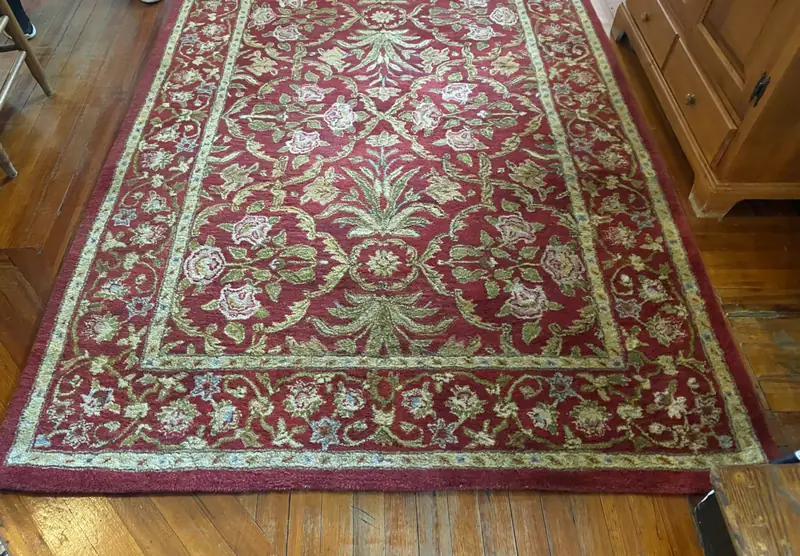
Time for a closer look?
- Color fading from sun exposure
- Deep-set soil in dense pile
- Fringe discoloration
- Food or beverage stains
- Pet-related damage
- Dust mite accumulation
Let's care for
something remarkable.
A favorite piece. A family heirloom.
A room that feels like you again.