
Antique Rug Cleaning
in Jersey City
Gentle, low-agitation cleaning for vintage and antique rugs, with preservation first.
Arrange a pickup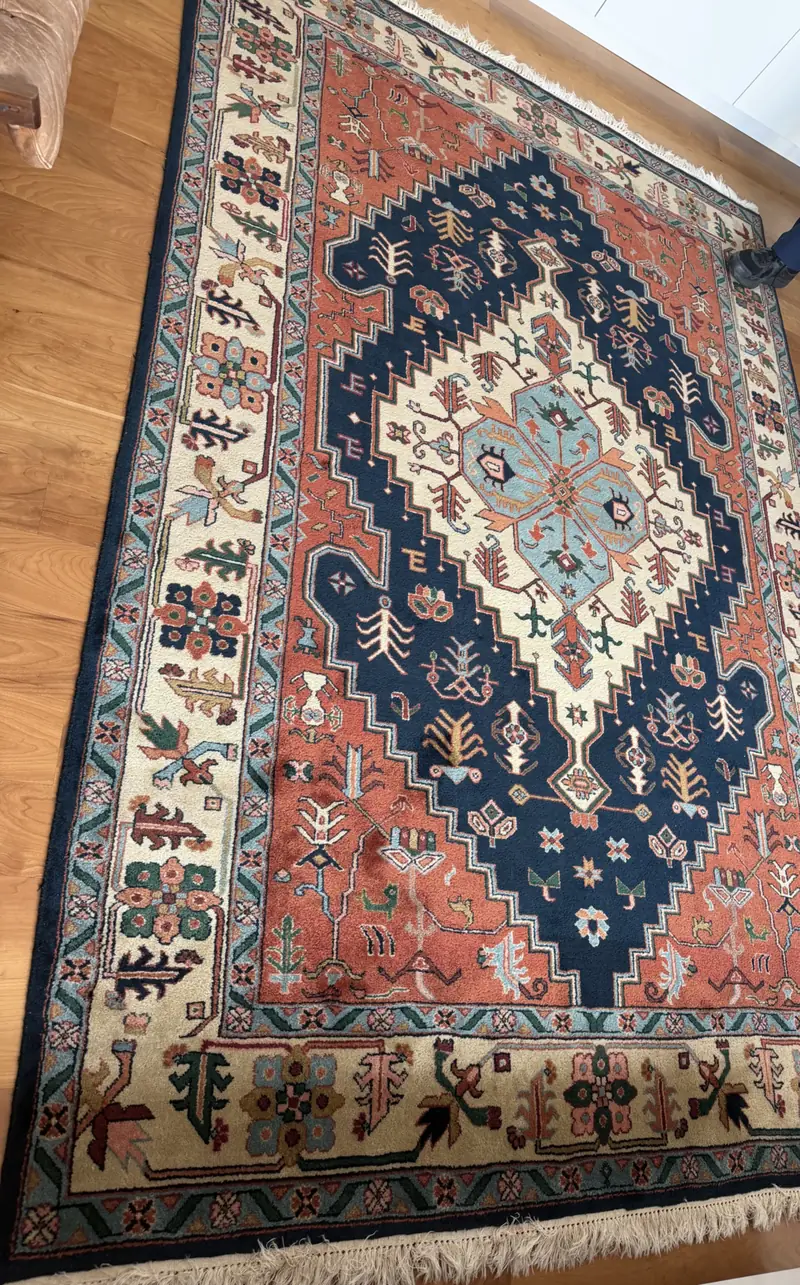 PHOTOGRAPHED BY OUR TEAM
Care begins with
understanding.
Antique rugs require an extraordinarily careful approach. Age, natural dyes, and delicate fibers demand cleaning techniques that prioritize preservation above all else. Our specialists evaluate each antique piece for colorfastness, structural integrity, and fiber fragility before selecting a cleaning protocol. We use gentle, low-agitation methods that remove decades of accumulated soil while honoring the character and patina that make your rug a treasure.
We discuss the condition, recommended treatment and expected outcome with you. The appropriate method is selected after inspection; not every treatment is suitable for every rug.
Antique Rug Cleaning in Jersey City
Buildings finished before 1940 hold 29 percent of Jersey City homes, from the Paulus Hook rowhouses to the older apartment houses near Journal Square. An antique rug that has spent decades in a place like that may have been cleaned in the past by harsh methods, leaving the wool dry and the foundation brittle. Before pickup, bend a corner back gently: if it resists or crackles, leave it flat and note it on the tag. The cleaning is kept as gentle as the fibers need, and earlier repairs, reweaves and loose ends are pointed out at the assessment, before any water is used. Getting an old rug down from an upper floor is a slow business, and it should be: the roll is carried with support under its whole length, so no point along a brittle foundation takes the strain of its own weight. Tell us the floor and the turns on the way out, and leave the rug unrolled until we arrive rather than dragging it folded through a doorway. At the wash, the approach is low agitation from the first test onward: each color is checked for fastness, the solution is near neutral, and the rug is handled as gently as wet work allows, since a foundation that has dried out and lost its give can be pushed out of shape by handling a newer rug would shrug off. Drying is flat, with the pile realigned by hand while it is still damp enough to lie as it should. Age shows in places the assessment records one by one: ends where the fringe has been trimmed back over the years and the knots now sit close to the edge, sides where the binding has been sewn over, a re-woven patch that sits slightly differently from the weaving around it. Each of these is noted so the wash does not undo past work. What the wash changes is the soil, and decades of it: dust and city grime that have settled through the pile, and the gray that has crept over colors that were once distinct. The colors do not come back brighter than they were; the haze over them lifts, which reads as a quieter, cleaner version of the same rug. Some of what age does stays: a crease where the rug was folded for a move long ago may soften in the wash while never quite lying flat again. We say which of these to expect before the work starts, and the rug comes home with a note of the work done and what was left as it was.
- 14%single family houses
- 29%built before 1940
- 28%owner occupied
A careful
consideration.
- 01Colorfastness testing
- 02Low-agitation hand-cleaning
- 03Natural pH-neutral solutions
- 04Controlled flat drying
- 05Gentle pile realignment
- 06Careful, supported handling
Time for a closer look?
- Decades of embedded dust
- Fragile or brittle fibers
- Color bleeding risk
- Moth or insect residue
- Musty storage odor
- Surface grime obscuring pattern
Let's care for
something remarkable.
A favorite piece. A family heirloom.
A room that feels like you again.