
Persian Rug Cleaning
in the East Village and Lower East Side
Deep expertise in Persian rug construction and dyes, cleaned according to region and fiber.
Arrange a pickup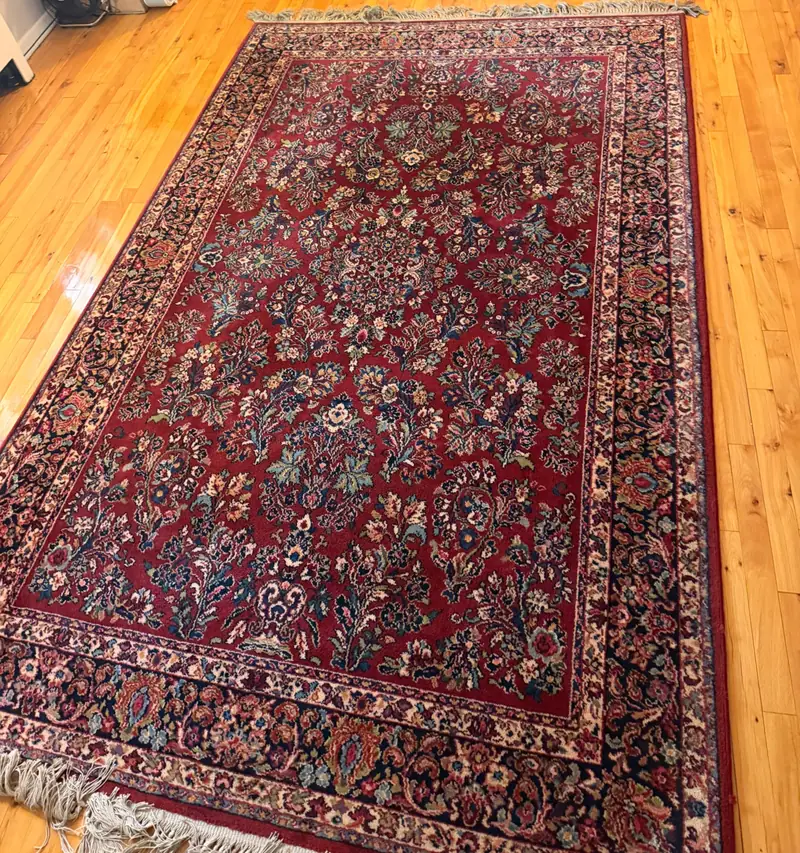 PHOTOGRAPHED BY OUR TEAM
Care begins with
understanding.
Persian rugs are among the world's most coveted textiles, each reflecting the tradition of its region, from the intricate florals of Isfahan to the bold geometry of Heriz. Our cleaning approach accounts for the specific knot density, dye type, and wool or silk composition of each Persian piece. We work to lift embedded soil and bring back color while preserving the rug's character.
We discuss the condition, recommended treatment and expected outcome with you. The appropriate method is selected after inspection; not every treatment is suitable for every rug.
Persian Rug Cleaning in the East Village and Lower East Side
Persian runners, long and narrow, are made for halls and stairs, and a Hamadan or Malayer runner can be several times longer than it is wide. Length is what matters on the way out: a long runner rolls into a slim, heavy bundle that has to clear tight landings and short elevator cabs. In the East Village and Lower East Side, 47 percent of homes are in elevator buildings and most of the rest are walk-ups, so give us the runner's length and the floor when you book. Each Persian is washed according to its region and weave, and we look at the dyes and the foundation first. A fine city weave with tight knots and a short pile takes a different bath from a village piece with a looser, thicker pile, and the dyes differ with the region: the reds of one area and the blues of another behave differently in water, which is why a test on a hidden part of the rug comes before any soaking. Colors from natural dyestuffs are stabilized before the wash, and where one shade is restless, the bath is shortened and the rinsing goes stage by stage so the color keeps to the wool where it was put. The wash is an immersion hand-wash, and the rinsing matters more than it sounds: soil that has settled deep in a dense pile takes several passes of clean water to leave, and a rug rinsed carelessly holds grit behind its knots for years. Drying is done lying flat, with air moved across it, and the fringe is dealt with by hand after the body of the rug has dried. Worn edges along a runner's sides are common where it met a wall or a door; we point them out before cleaning, and they stay as they are afterward, since washing clears soil and cannot rebuild pile. What does change is the depth of the color and the way the rug feels underfoot, and along the borders, where feet rarely fall, the difference between the cleaned field and the untouched edge shows how much soil the room had put into it.
- 47%of homes in elevator buildings
- 51%built before 1940
- 6floors in the median home's building
A careful
consideration.
- 01Region-specific cleaning protocols
- 02Natural dye stabilization
- 03Full immersion hand-wash
- 04Multi-stage rinsing
- 05Flat drying with air circulation
- 06Hand-finished fringe cleaning
Time for a closer look?
- Color fading from sun exposure
- Deep-set soil in dense pile
- Fringe discoloration
- Food or beverage stains
- Pet-related damage
- Dust mite accumulation
Let's care for
something remarkable.
A favorite piece. A family heirloom.
A room that feels like you again.