
Pet Stain & Odor Removal
in Roslyn
Enzyme treatments that work deep into the fibers to break down pet stains and odors.
Arrange a pickup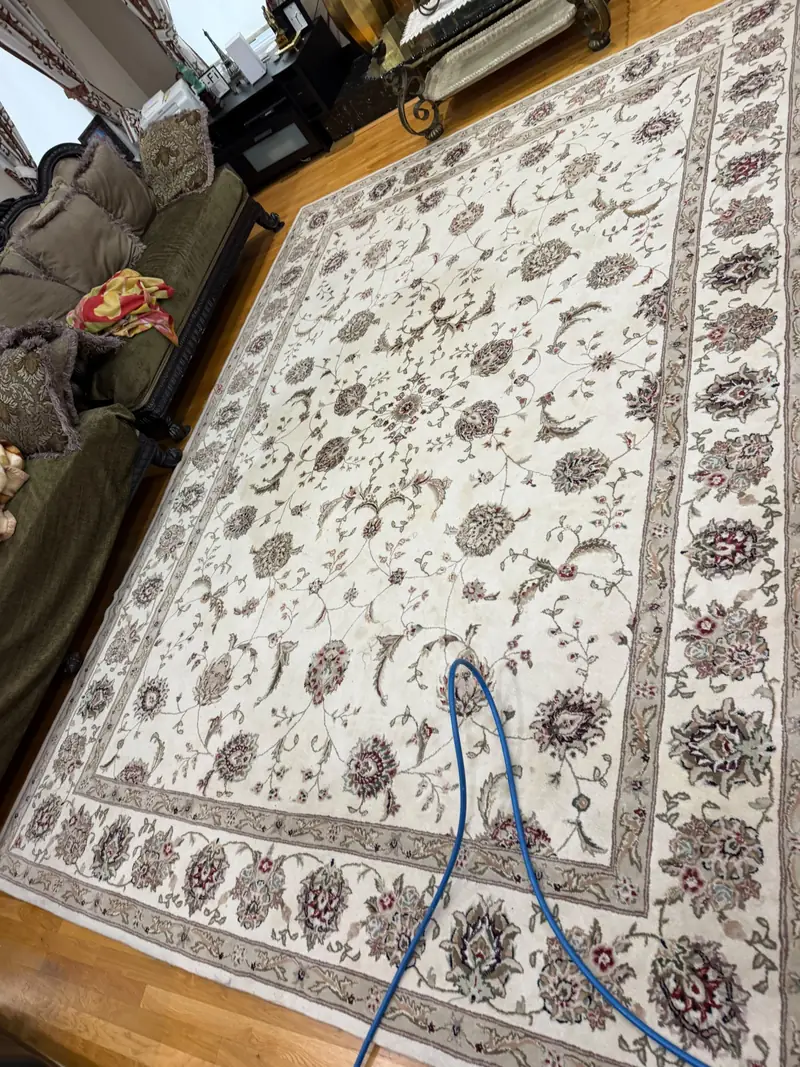 PHOTOGRAPHED BY OUR TEAM
Care begins with
understanding.
Pet accidents are one of the most common and challenging rug issues. Urine, in particular, penetrates deep into the pile, foundation, and even the floor beneath. Surface cleaning alone cannot resolve the problem. Our advanced enzyme-based treatments break down uric acid crystals, the source of lingering odor. Combined with deep sanitization and controlled drying, we address the stains and odors that surface cleaning leaves behind. We tell you before we start what can realistically improve.
We discuss the condition, recommended treatment and expected outcome with you. The appropriate method is selected after inspection; not every treatment is suitable for every rug.
Pet Stain & Odor Removal in Roslyn
Urine soaks down through the knots and the foundation and into anything beneath, the pad, the floor and in a bad case the subfloor, which is why the smell returns after a quick clean. A color urine has altered does not come back, and we mark such spots with you first. With the median home here built in the 1950s, most rugs lie on wood; after we take the rug, check the boards under the stain and dry them well. Until pickup, blot a fresh accident with a towel, dab on a little cool water, blot again, and keep ammonia cleaners away. The work begins under UV light, which maps each place the urine has reached, including rings that dried pale months ago and stay hidden in ordinary light, because the map decides how much of the rug the treatment must cover. The treatment that follows works with enzymes, which take apart the uric acid crystals that hold a stain in its reactive state long after it looks dry to the eye, and the rug is then flushed deep through its fiber so the crystals are drawn out instead of sealed in. An antimicrobial sanitization follows where the history of accidents calls for it, and the drying is regulated precisely to stop wicking, the process that pulls a stain from within the foundation up into the visible pile while a rug dries slowly from its surface. Odor verification testing comes last, and it is run on the fully dried rug, since a smell that goes away while the rug is still damp may reappear once the fiber has dried, and the work is called done only when the fully dried rug passes its test. What changes in the room is the air itself, since an accident that soaked through weeks ago leaves the whole space carrying a faint trace however often the floor is mopped, and taking the source away is what clears it. Spots where the color has shifted for good can be covered with furniture, and the assessment points out which those are before the work, so nothing on return is a surprise. Keep scented sprays away from the rug while you wait, since they harden the very material the enzyme works on.
- 86%single family houses
- 16%built before 1940
- 87%owner occupied
A careful
consideration.
- 01UV light stain mapping
- 02Enzyme-based uric acid treatment
- 03Deep fiber flushing
- 04Antimicrobial sanitization
- 05Controlled drying to prevent wicking
- 06Odor verification testing
Time for a closer look?
- Visible urine stains
- Persistent ammonia odor
- Repeated pet marking
- Vomit or fecal staining
- Discoloration around stain
- Bacterial contamination
Let's care for
something remarkable.
A favorite piece. A family heirloom.
A room that feels like you again.