
Pet Stain & Odor Removal
in Great Neck
Enzyme treatments that work deep into the fibers to break down pet stains and odors.
Arrange a pickup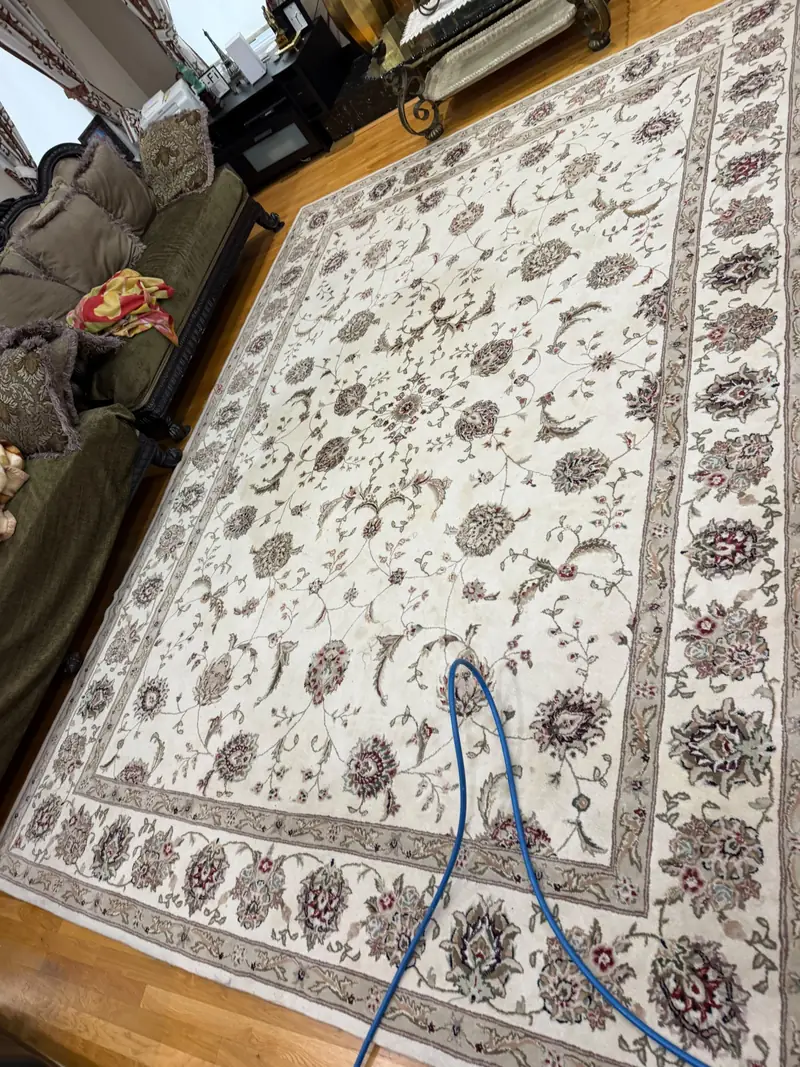 PHOTOGRAPHED BY OUR TEAM
Care begins with
understanding.
Pet accidents are one of the most common and challenging rug issues. Urine, in particular, penetrates deep into the pile, foundation, and even the floor beneath. Surface cleaning alone cannot resolve the problem. Our advanced enzyme-based treatments break down uric acid crystals, the source of lingering odor. Combined with deep sanitization and controlled drying, we address the stains and odors that surface cleaning leaves behind. We tell you before we start what can realistically improve.
We discuss the condition, recommended treatment and expected outcome with you. The appropriate method is selected after inspection; not every treatment is suitable for every rug.
Pet Stain & Odor Removal in Great Neck
Urine reaches the foundation and the pad beneath it and, given time, the floor, which is why a surface cleaning never ends the smell. A dye that urine has bleached or darkened stays that way, and we point it out at the assessment. With the median home here dating from the 1950s, many floors are hardwood or parquet under the rugs; once the rug is collected, check the wood under the stain and give it time to dry. Until pickup, blot with cool water and a towel, and keep steam cleaners away, since heat sets the stain. Keep ammonia-based sprays away too, because they smell close enough to urine to invite the animal back to the same corner. The work begins with UV light stain mapping, which finds urine long after the face of the rug looks clean, and the map decides what gets treated and how deep the treatment has to go. A fresh spot is flushed in the wash; a foundation that has soaked it up is treated through its whole depth; odor that lives in the backing calls for a pass through the backing itself. The enzyme treatment dissolves the uric acid crystals, which is why a smell outlives the stain, and an antimicrobial treatment follows where the map calls for one. Drying is controlled rather than abandoned to the air, because a rug left to dry slowly from the base upward can carry what stayed deep in the pile up to the surface, and the spot shows again days later looking new. Odor verification closes the work: the treated areas are checked before the rug is returned, and anything that still reads is treated again rather than discovered at home. Where urine has changed a dye, no cleaning returns the color, and those spots are shown to you and named before the wash, so the result matches what you were told. If accidents took place while the rug was rolled up or in storage, say so, because the pattern the moisture left reads differently, and where one corner has been used repeatedly, that history matters to the treatment plan as well.
- 48%single family houses
- 19%built before 1940
- 69%owner occupied
A careful
consideration.
- 01UV light stain mapping
- 02Enzyme-based uric acid treatment
- 03Deep fiber flushing
- 04Antimicrobial sanitization
- 05Controlled drying to prevent wicking
- 06Odor verification testing
Time for a closer look?
- Visible urine stains
- Persistent ammonia odor
- Repeated pet marking
- Vomit or fecal staining
- Discoloration around stain
- Bacterial contamination
Let's care for
something remarkable.
A favorite piece. A family heirloom.
A room that feels like you again.