
Pet Stain & Odor Removal
in Cobble Hill & Carroll Gardens
Enzyme treatments that work deep into the fibers to break down pet stains and odors.
Arrange a pickup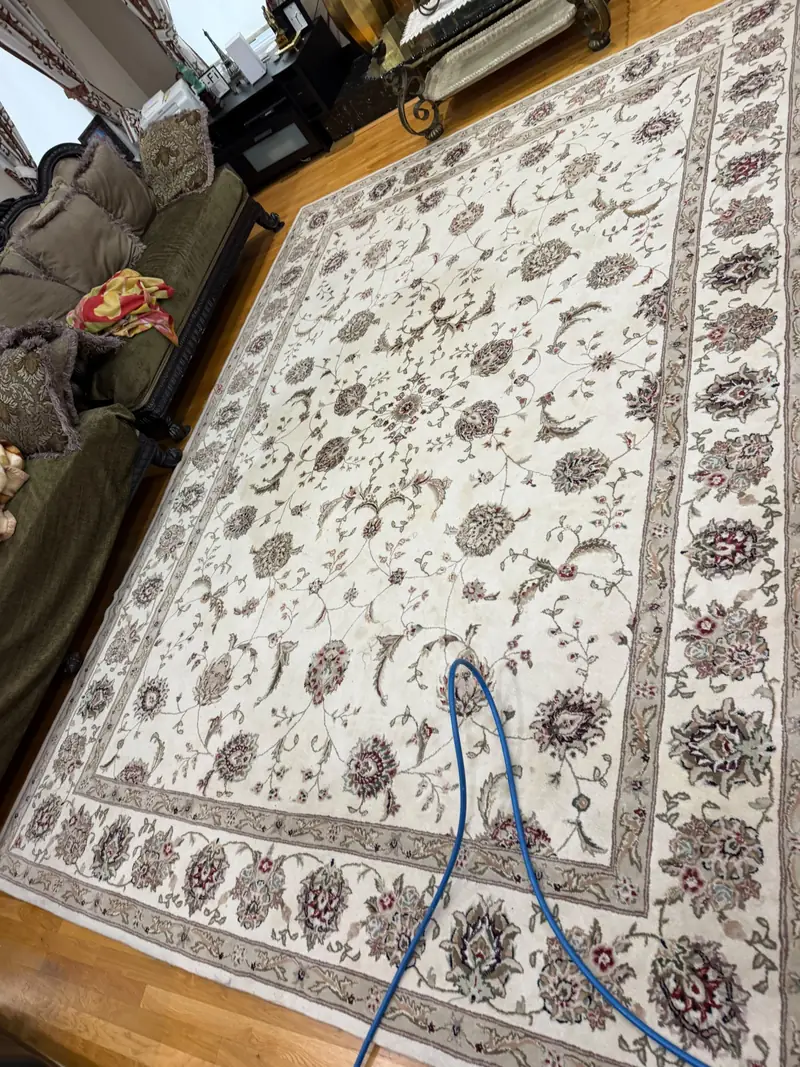 PHOTOGRAPHED BY OUR TEAM
Care begins with
understanding.
Pet accidents are one of the most common and challenging rug issues. Urine, in particular, penetrates deep into the pile, foundation, and even the floor beneath. Surface cleaning alone cannot resolve the problem. Our advanced enzyme-based treatments break down uric acid crystals, the source of lingering odor. Combined with deep sanitization and controlled drying, we address the stains and odors that surface cleaning leaves behind. We tell you before we start what can realistically improve.
We discuss the condition, recommended treatment and expected outcome with you. The appropriate method is selected after inspection; not every treatment is suitable for every rug.
Pet Stain & Odor Removal in Cobble Hill & Carroll Gardens
Buildings from this century hold 33 percent of the homes here, and the sealed floors common in them change the pet problem in a useful way: urine cannot soak in, so it spreads beneath the rug and dries slowly at the margins, and wiping the floor after the pickup does more for the room than any spray. In the older houses and walk-ups, the boards under a rug are wood that takes urine in and holds the smell, so raise the rug clear of a fresh accident and give the floor time to dry before it lies back down. At booking, name the animal, say roughly when it happened, and describe whatever was put on it at home, since those answers pick the treatment before the rug is seen; skip the household remedies meanwhile, because ammonia smells like urine to the animal and draws it back to the spot, and vinegar can leave a residue or shift a dye. Urine works down through a rug in stages: while new, it sits in the pile alone; inside a week it has soaked the foundation, and inside months it has reached the floor beneath, and how old the accident is decides how deep the treatment must go, more than its size does. Mapping comes before anything else: an ultraviolet light showing up each spot the acid has touched, halos among them that look clean in ordinary room light, and the flushing tracks that map, spot by spot. Enzyme work then decomposes the uric acid crystals that stand behind the smell returning on humid days, and it must reach as deep as the urine did, since a pass that halts at the surface leaves the deeper crystals sitting in place, and the smell comes back within the week. Drying is controlled so wicking never starts, the upward creep of moisture in a drying rug that brings stain back toward the surface, and an odor verification ends the work before the wrapping goes on. Where urine has moved a dye, you hear about the shift before any work starts.
- 41%of homes in elevator buildings
- 52%built before 1940
- 4floors in the median home's building
A careful
consideration.
- 01UV light stain mapping
- 02Enzyme-based uric acid treatment
- 03Deep fiber flushing
- 04Antimicrobial sanitization
- 05Controlled drying to prevent wicking
- 06Odor verification testing
Time for a closer look?
- Visible urine stains
- Persistent ammonia odor
- Repeated pet marking
- Vomit or fecal staining
- Discoloration around stain
- Bacterial contamination
Let's care for
something remarkable.
A favorite piece. A family heirloom.
A room that feels like you again.