
Pet Stain & Odor Removal
in Brooklyn Heights
Enzyme treatments that work deep into the fibers to break down pet stains and odors.
Arrange a pickup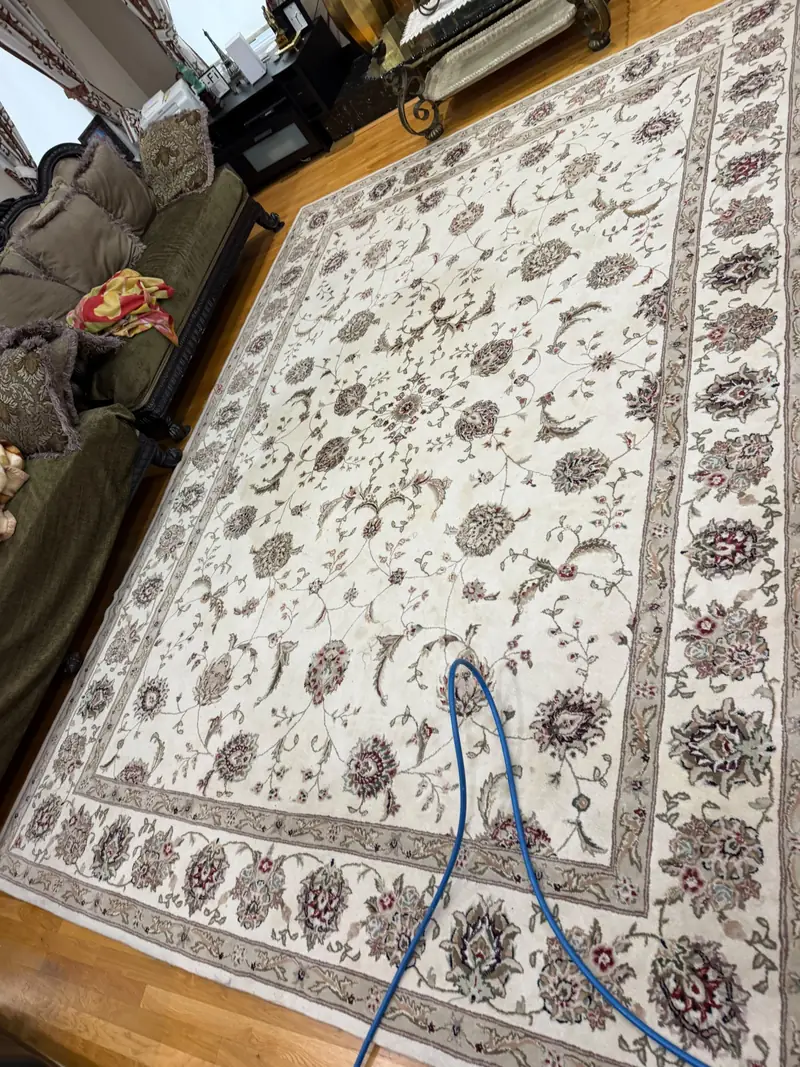 PHOTOGRAPHED BY OUR TEAM
Care begins with
understanding.
Pet accidents are one of the most common and challenging rug issues. Urine, in particular, penetrates deep into the pile, foundation, and even the floor beneath. Surface cleaning alone cannot resolve the problem. Our advanced enzyme-based treatments break down uric acid crystals, the source of lingering odor. Combined with deep sanitization and controlled drying, we address the stains and odors that surface cleaning leaves behind. We tell you before we start what can realistically improve.
We discuss the condition, recommended treatment and expected outcome with you. The appropriate method is selected after inspection; not every treatment is suitable for every rug.
Pet Stain & Odor Removal in Brooklyn Heights
Houses account for 5 percent of the housing here, and their ground floors, often original boards, are exactly where a soaked rug does its worst: the moisture passes through the piece, sits against the plank surface, and darkens the wood at the margins, so raise the rug off a fresh accident and leave the boards open to the air until collection day. When booking, name the animal, estimate how long ago the accident happened, and disclose anything you applied at home, because those three answers select the treatment before the rug is even seen. Urine descends through a rug in recognizable stages: while new, it occupies the pile alone; after a week it has soaked the foundation; after months it has reached and marked the floor under the rug, and the age of the accident, more than its size, decides how far the treatment must reach. Mapping comes first: ultraviolet light brings out every trace the acid has left, including halos that pass for clean under room lighting, and the map dictates where the flushing goes. Enzyme formulations then decompose the uric acid crystals responsible for the smell that returns on humid days, and they must penetrate as deeply as the urine did, since a surface-only pass leaves the deeper crystals intact and the odor revives within the week. Where the foundation is soaked, treatment runs through the entire piece, and an antimicrobial stage follows wherever bacteria have established. Controlled drying prevents wicking, the upward migration of moisture during drying that redeposits stain at the pile surface, the mechanism behind those rings that appear days after an accident seemed resolved, and an odor verification at the close confirms the result before wrapping. Where urine has altered a dye, that alteration is permanent, and the affected areas are identified for you before any work starts. Blot fresh accidents with unbleached towels, withhold perfumed sprays, and keep the piece clear of radiators meanwhile, since applied heat fixes what a spill has left.
- 51%of homes in elevator buildings
- 69%built before 1940
- 6floors in the median home's building
A careful
consideration.
- 01UV light stain mapping
- 02Enzyme-based uric acid treatment
- 03Deep fiber flushing
- 04Antimicrobial sanitization
- 05Controlled drying to prevent wicking
- 06Odor verification testing
Time for a closer look?
- Visible urine stains
- Persistent ammonia odor
- Repeated pet marking
- Vomit or fecal staining
- Discoloration around stain
- Bacterial contamination
Let's care for
something remarkable.
A favorite piece. A family heirloom.
A room that feels like you again.