
Antique Rug Cleaning
in Brooklyn
Gentle, low-agitation cleaning for vintage and antique rugs, with preservation first.
Arrange a pickup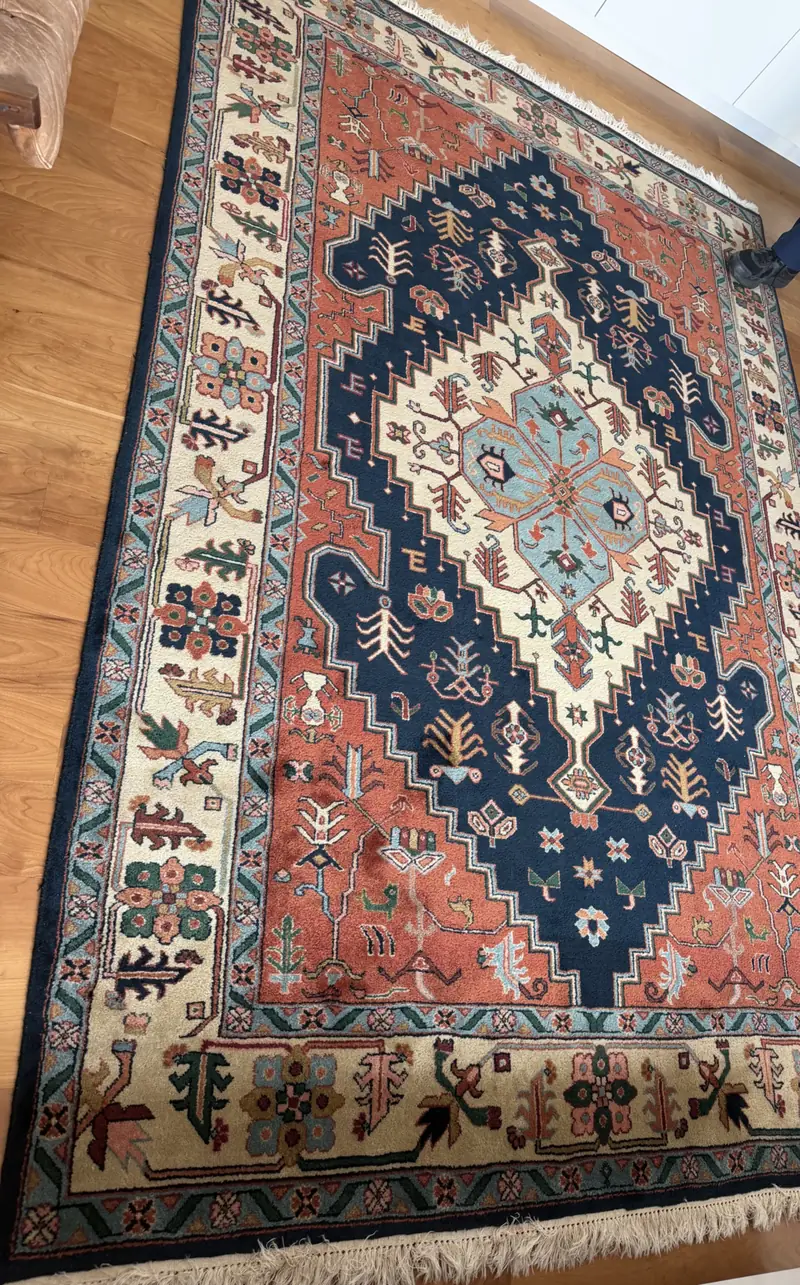 PHOTOGRAPHED BY OUR TEAM
Care begins with
understanding.
Antique rugs require an extraordinarily careful approach. Age, natural dyes, and delicate fibers demand cleaning techniques that prioritize preservation above all else. Our specialists evaluate each antique piece for colorfastness, structural integrity, and fiber fragility before selecting a cleaning protocol. We use gentle, low-agitation methods that remove decades of accumulated soil while honoring the character and patina that make your rug a treasure.
We discuss the condition, recommended treatment and expected outcome with you. The appropriate method is selected after inspection; not every treatment is suitable for every rug.
Antique Rug Cleaning in Brooklyn
In 57 percent of Brooklyn homes the building predates 1940, and the row houses among them commonly have a garden level set partly below the sidewalk, a floor that holds damp through the summer and breathes it into whatever lies on it. Cotton warps and wefts that stay moist for long stretches can rot from the inside, going stiff and brittle while the pile above them still looks sound, which is why a damp history matters more for an antique than any single stain does. Before pickup, slide a hand under the rug and press along the back; a crackle under your fingers, or a band that has lost its flex, belongs on the tag in plain words, and the piece should lie flat rather than rolled tight until it is collected. The assessment before any water covers the dyes, the foundation and every earlier mend, and it comes back to you in plain terms: where a normal wash is possible, where a weaker bath is called for, and where rot has gone too far to wash at all. Rot is never undone by cleaning, and the plain part of this service is finding how far it reaches and saying so. Where a wash is possible, it is done by hand with the least working the soil permits, in solutions close to neutral, since the vegetable dyes of that era can bleed long before a modern dyestuff would. Drying is flat and slow, the nap eased back into place by hand while damp, because brittle fibers shed at the knots when brushed hard once dry. Each old repair, from a rewoven square to a re-stitched side, is logged at intake and routed around in the wash. What a successful wash gives back: decades of dust that had blurred the whole pattern lifts away and the drawing reads plainly again. What it gives back nothing for: foundation brittleness already there, and pile worn away by feet, both of which stay and are pointed out to you.
- 31%of homes in walk-ups
- 57%built before 1940
- 4floors in the median home's building
A careful
consideration.
- 01Colorfastness testing
- 02Low-agitation hand-cleaning
- 03Natural pH-neutral solutions
- 04Controlled flat drying
- 05Gentle pile realignment
- 06Careful, supported handling
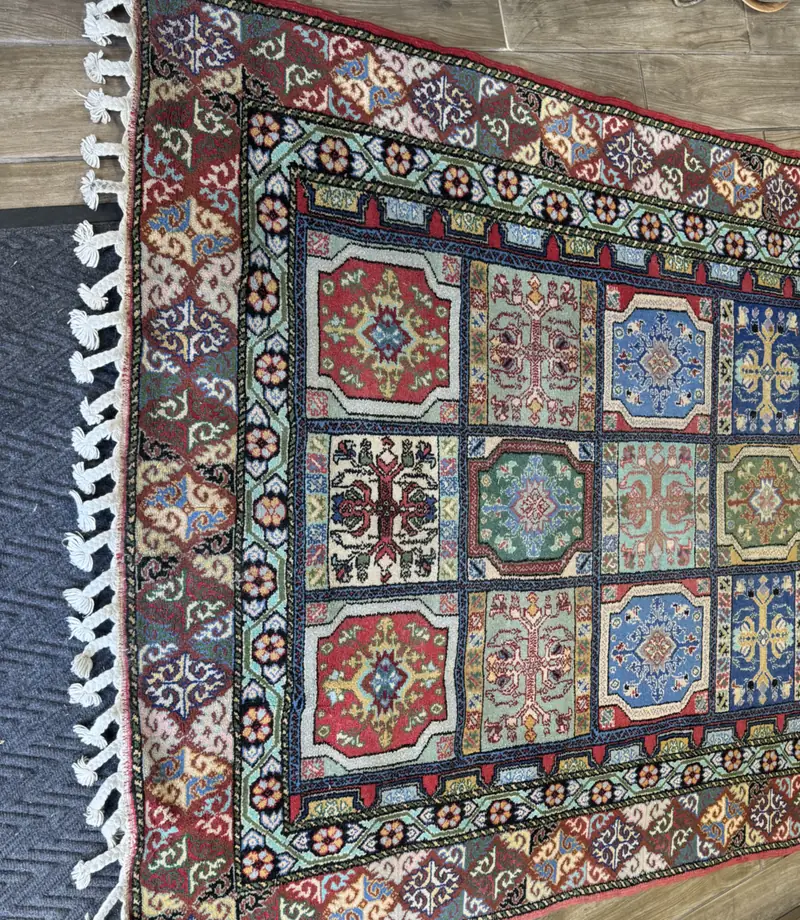
Time for a closer look?
- Decades of embedded dust
- Fragile or brittle fibers
- Color bleeding risk
- Moth or insect residue
- Musty storage odor
- Surface grime obscuring pattern
Let's care for
something remarkable.
A favorite piece. A family heirloom.
A room that feels like you again.