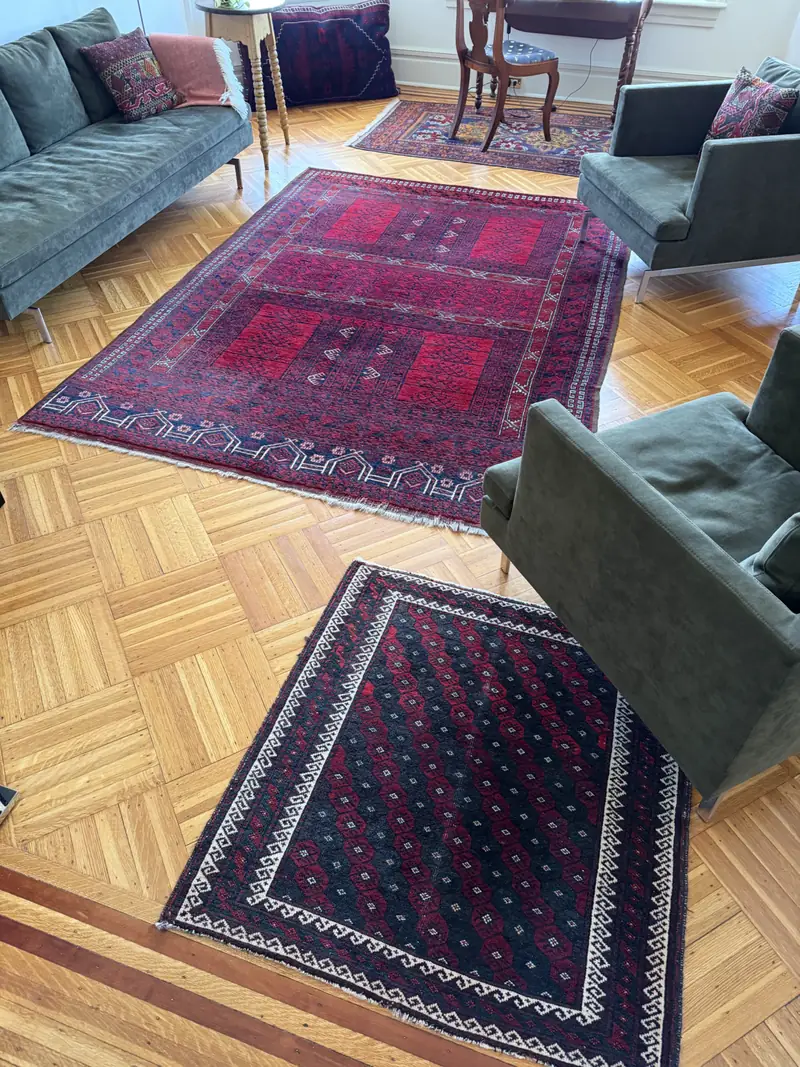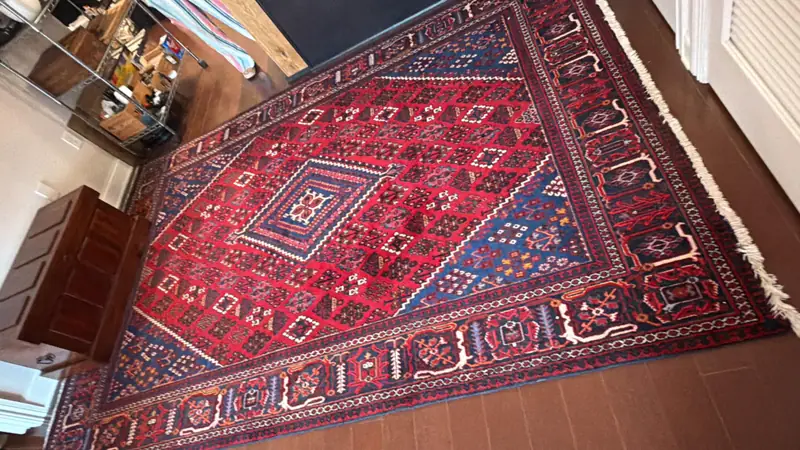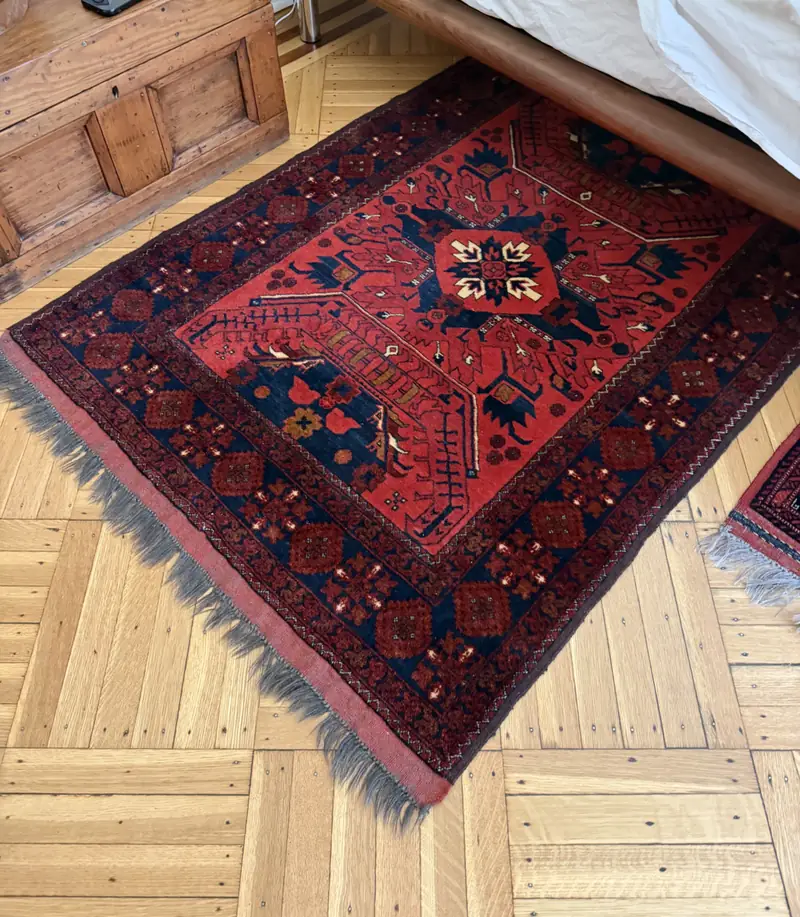
Most rugs in a lived-in home do well with vacuuming about once a week and a full professional wash every one to two years. A rug in an entry, under a dining table, or in a home with pets and small children usually needs washing every year, while a rug in a guest room or bedroom can often go three years or more. Those numbers are starting points. The rug's fiber, its location and the household around it decide the real schedule, and the signs on the rug itself are the best guide.
Vacuuming: how often by room
Vacuuming does more for a rug's lifespan than any other habit, because it removes the dry grit that grinds fibers down. A practical rhythm:
- Entry rugs and hallway runners: two or three times a week, more often in winter when salt and slush come in.
- Living and family room rugs: once a week.
- Dining room rugs: once a week, plus a quick pass after meals with crumbs.
- Bedroom rugs: every week or two, depending on traffic.
- Rugs in homes with shedding pets: as often as hair is visible, often twice a week.
- Silk and fragile antique rugs: a light pass with suction only and no brush roll, less often, and never across the fringe.
On hand knotted rugs, switch off the beater bar or use a suction head. Every few months, flip the rug and vacuum the back, which shakes loose grit that has settled into the foundation.
Full washing: a guide by household
How often a rug needs a full professional wash depends mostly on how much soil reaches it. A general guide:
- Busy household with pets or young children, rug in a main room: about once a year.
- Couple or single adult, rug in a living room: every one to two years.
- Bedroom, home office or guest room: every two to three years, sometimes longer.
- Entry rug in a city apartment: once a year, and ideally after the winter salt season.
- Rugs in homes with allergies or asthma: often on the shorter end, to remove the dust and allergens that build up in the pile.
These ranges come from what rug cleaners commonly recommend, and people who clean rugs for a living differ on the details. Treat them as a reminder to look closely, not as a rule.
What shortens the interval
Several things send a rug back for washing sooner than its room alone would suggest:
- Shoes worn indoors, which carry in far more grit than bare feet or socks.
- Pets, for hair, dander, oily coats and accidents.
- A kitchen nearby, where cooking oil settles into the pile and holds soil.
- A ground floor or garden apartment with a door straight onto the street.
- A spill that was blotted but not fully rinsed, which leaves a residue that attracts dirt.
- Signs of moths. Any sign of larvae calls for a wash right away, regardless of the schedule.
Rugs that are better washed less often
Not every rug benefits from frequent wet cleaning. Silk rugs, fragile antiques, and rugs with dyes that are known to be unstable take more out of a wash than sturdy wool does. For these, the better plan is gentle, regular dry maintenance, careful placement out of traffic and sun, and a full cleaning only when the rug needs it. A wash every few years is often enough for a silk or antique rug that sits in a quiet room, and an assessment beforehand decides which method the fiber and dyes can handle.
Low-traffic rugs on a wall or under a bed also gather mostly dust rather than ground-in soil, and careful vacuuming handles much of it between washes.
Between washes: spot care and rotation
Good habits stretch the time between professional cleanings.
- Blot spills right away from the outside in, using cool water. Do not rub, and never use bleach.
- Test any product on a hidden corner first, and stop if color moves onto the cloth.
- Rotate rugs end for end every six months, so traffic and sun spread more evenly.
- Use a rug pad, which lifts the rug off the grit that collects on the floor.
- Keep steam cleaners and rental machines away from hand knotted, silk and antique rugs.
After a wash, a fiber protector can help a busy rug stay cleaner longer, because spills bead on the surface long enough to be blotted.
How to tell a rug is due, whatever the calendar says
The rug itself gives the clearest signal. Check for these:
- Grit on the floor when you lift a corner, or a gritty feel when you rub the pile.
- A dull or gray look in traffic lanes that vacuuming does not change.
- A musty, sour or pet smell, especially on humid days.
- Fringe that has turned gray or yellow.
- Pile that feels stiff or sticky in places.
- Colors that look muted next to an edge hidden under a sofa.
If two or more apply, the rug is due, even if the last wash was recent. For most rugs, a full area rug cleaning begins with an assessment of fiber, construction, dyes and condition, so the method fits that rug. Pet homes and allergy households can add rug sanitizing to reduce bacteria, dust mites and allergens in the pile.