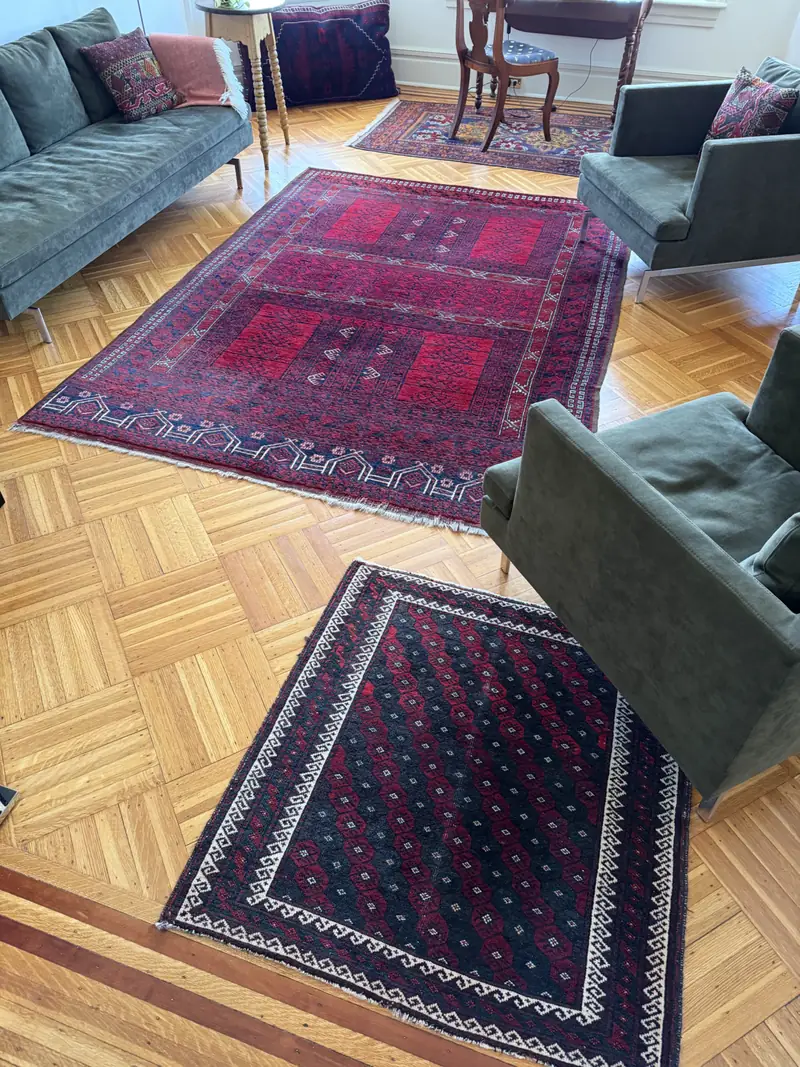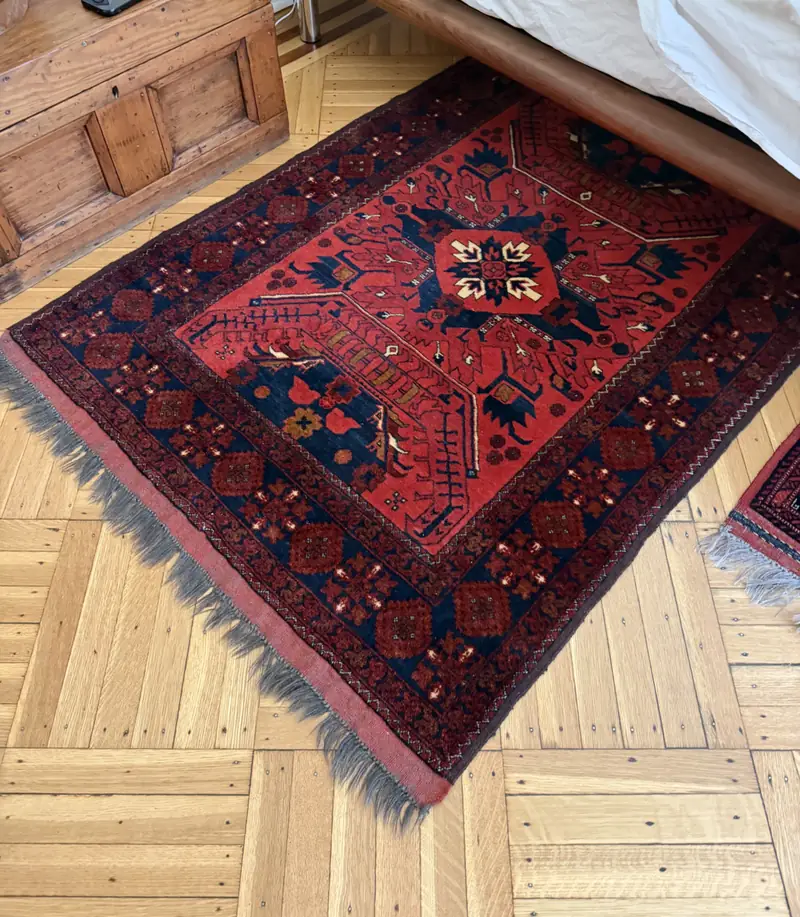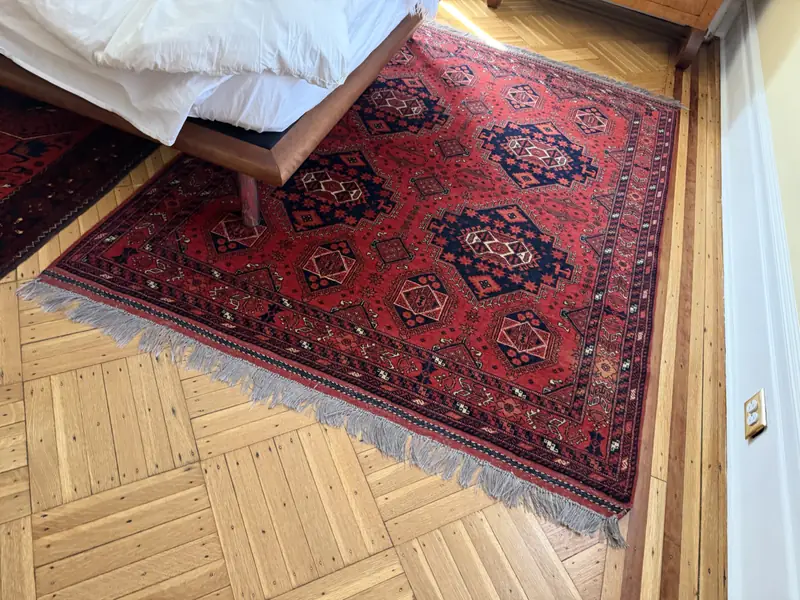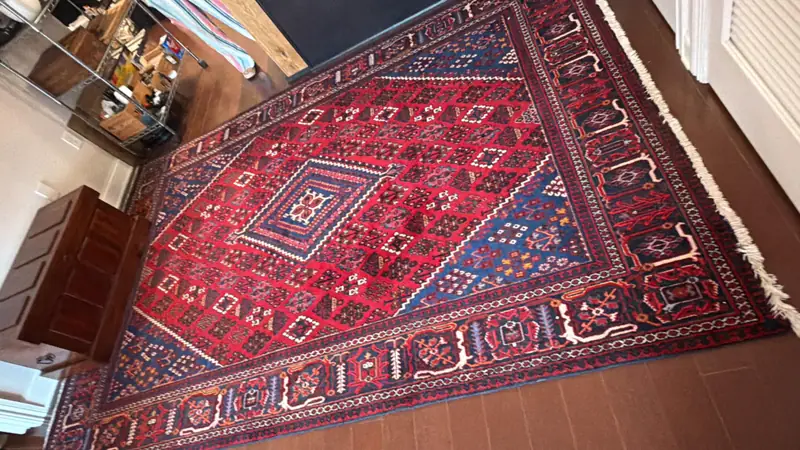
The way to keep a rug alive in a busy New York apartment is to stop grit before it reaches the pile, spread footsteps so no single path takes all the wear, and clean the traffic lanes before soil starts cutting the fiber. Small apartments concentrate traffic. One hallway, one route from the door to the couch, one spot in front of the kitchen counter. This guide goes room by room, because each of those spots wears in its own way.
Why traffic lanes wear before the rest of the rug
Wear in a rug is mostly abrasion. Sand and street grit settle to the base of the pile, and every step grinds those particles against the fibers like fine sandpaper. Wool is resilient, but the scales on each fiber get worn down over time, and a worn fiber scatters light differently. That is why a traffic lane often looks gray or dull even right after vacuuming. It is not dirty so much as abraded.
Pressure matters too. Pile that is stepped on in the same place thousands of times flattens and stays down, especially in a dense, short wool pile. Lifting it again is possible with grooming and cleaning when the fiber is still sound. Once the pile is worn to the knots, nothing brings it back.
The entry: where the city comes in
Most of the grit in an apartment arrives on shoes. City sidewalks carry fine sand, soot, salt in winter, and whatever else the street holds, and the first few steps inside take the heaviest load.
- Use a coarse mat outside the door and a washable one inside. The good rug should start a step or two after that.
- Make a shoes-off habit near the door if your household will keep it. A shoe rack within reach of the entry makes the habit easier.
- Vacuum the entry rug more often than any other rug in the home. In winter, vacuum dry salt before it gets wet again.
- Lift the rug every few months and look underneath. A fine layer of sand on the floor below means grit has worked through the foundation, and the rug is due for a wash.
Hallways and runners
A runner in a narrow hallway gets walked in a straight line, almost always in the same strip down the middle. The edges stay fresh while the center thins, and with daily use the runner develops a visible lane.
Turn the runner end for end a few times a year. This does not move the center strip to the edge, but it changes the direction of the pile against foot traffic, which evens out how it wears and how it looks. If the hallway is wider than the runner, shift it a few inches to one side for a season and then back.
Watch the ends. Runners in tight hallways often get caught by doors, vacuum heads and shoes, and fringe on a runner takes a beating. Vacuum across fringe with suction only, and never let the beater bar pull on it. Loose or fraying fringe is easier to stabilize early than late.
The living room: the path to the sofa
In a living room, traffic follows furniture. People walk the same route from the doorway to the sofa, from the sofa to the window, and around the coffee table. Over time, those routes show up as lighter, flatter paths.
Rotating the rug end for end twice a year moves those paths to different parts of the field. Moving furniture slightly, even shifting the coffee table a few inches, also changes where feet land. Where a chair or table leg sits, use furniture cups so the weight spreads out instead of pressing the pile flat in a single point. When you move furniture, mist the crushed pile lightly with cool water and brush it upright with your fingers. Test first in a hidden corner.
Kitchen edges and dining chairs
A rug next to an open kitchen picks up grease and food spills that a hallway runner never sees. Cooking oil in the air settles as a film on the pile, and that film holds dry soil, so kitchen-adjacent rugs tend to darken faster than other rugs in the home.
- Blot food spills right away from the outside in. Do not rub, and use cool water only.
- For an oily spot, blot with a dry cloth, then a cloth barely dampened with cool water. Avoid household degreasers on wool, silk or any hand knotted rug.
- Under a dining table, chairs slide back and forth over the same strip. A rug that extends well past the chairs, so the legs stay on the rug when pulled out, wears more evenly than one where the legs catch the edge.
Signs a busy rug needs more than vacuuming
Some wear can be slowed with good habits. Some calls for a proper wash. Look for these signs:
- Grit on the floor under the rug, or a gritty feel when you rub the pile between your fingers.
- A traffic lane that stays gray after vacuuming.
- Pile that feels sticky or stiff in the lanes, a sign of oily soil or old spill residue.
- A musty or sour smell near the entry or kitchen.
- Fringe that is graying or starting to unravel.
A full area rug cleaning removes the abrasive soil that lives at the base of the pile, which slows the wear itself as well as improving the look. Every rug is checked for fiber, dye and condition before a method is chosen, so a wool runner and a silk piece from the same apartment get handled differently. After a wash, a fiber protector can make busy rugs easier to keep clean, because spills bead on the surface long enough to blot.