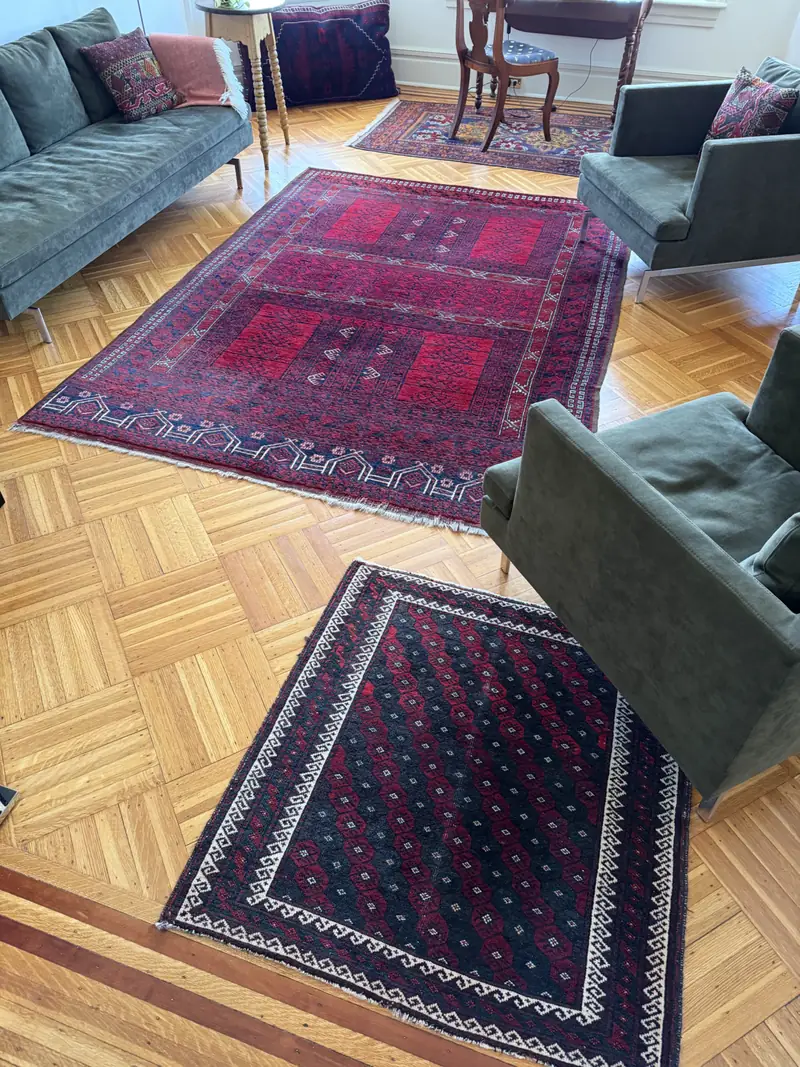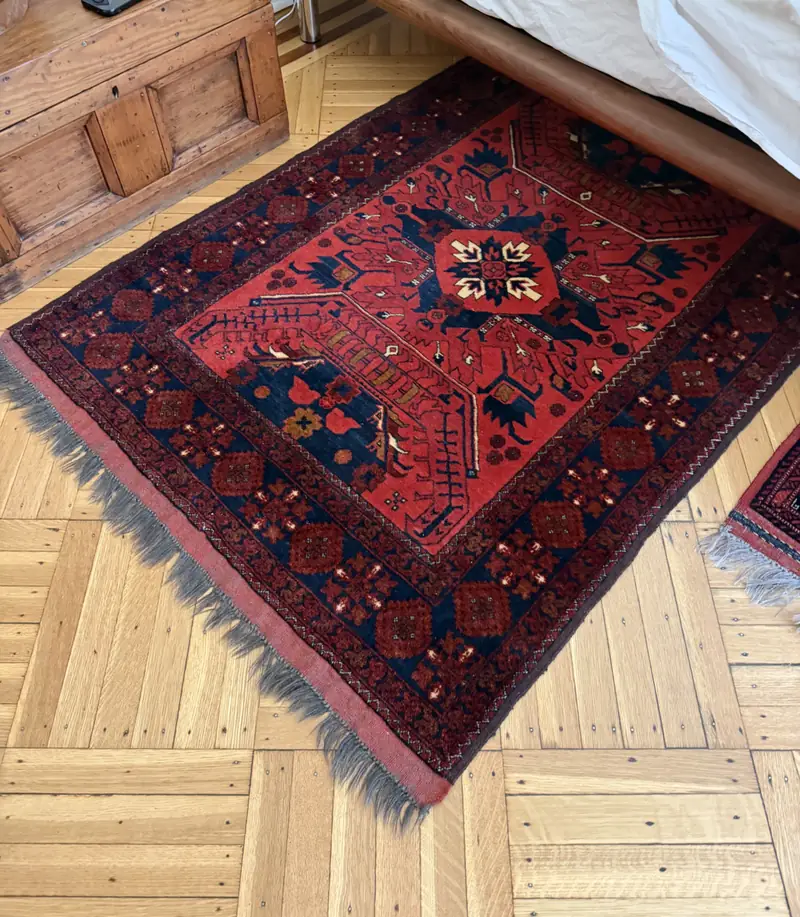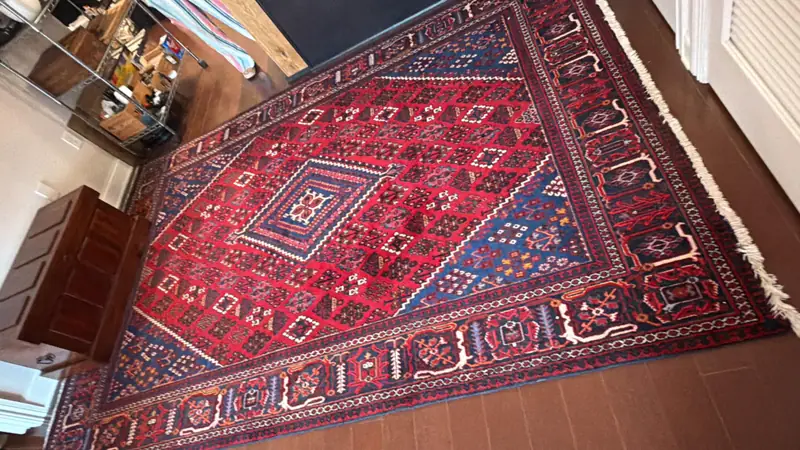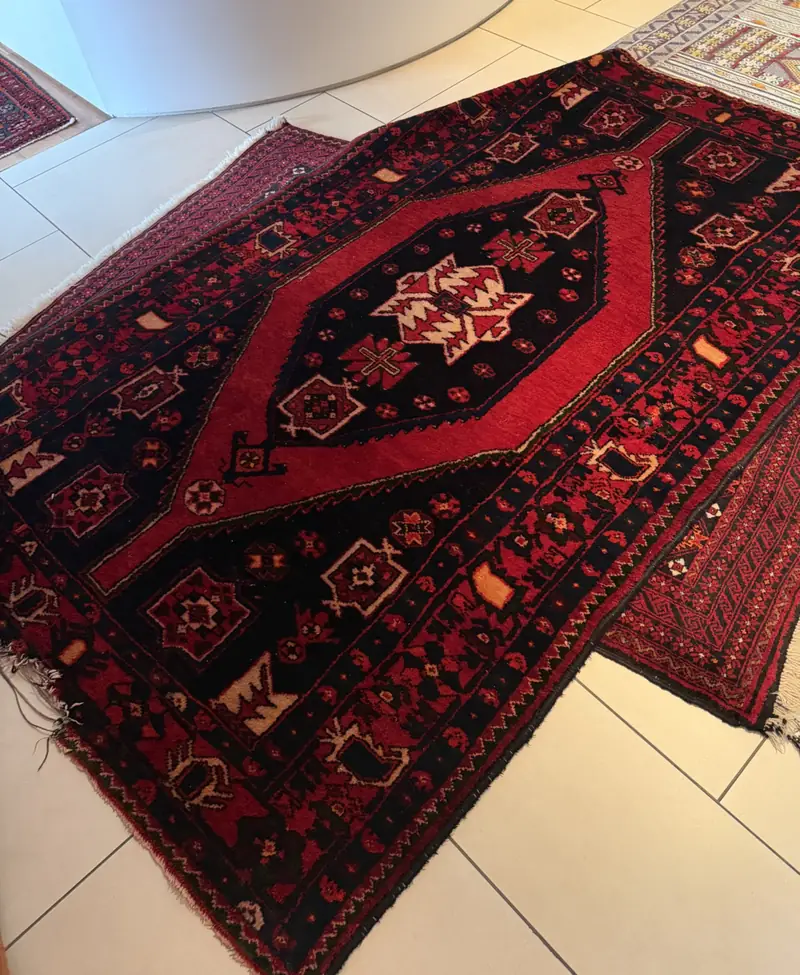
Most rugs are furnishings. Oriental rugs are closer to objects with a biography: hand-knotted from natural fiber, dyed by processes that predate the synthetic palette, and built to outlast the room they start in. Those facts are what separate an oriental rug from the machine-made piece at the corner store, and they are also the reason the two cannot be cleaned the same way. The general carpet versus rug distinctions cover the basics; this piece is about what makes the handmade category different as an object.
Hand-Knotted, Knot by Knot
An oriental rug is built on a foundation of warps and wefts, and its pile exists because a weaver tied individual knots around those warps, row after row, for months. A weaver working on a fine piece places perhaps ten thousand knots in a day. The finished knot count, often in the hundreds per square inch, is what carries the design's crispness: fine detail needs fine knots, the way fine print needs a fine pen.
Turn the rug over and the construction is visible. The pattern reads clearly on the back, knot by knot. The fringe is not an attachment; it is the ends of the warp threads, the skeleton the whole design hangs on. On a machine-made rug the back hides the front and the fringe is sewn on as a trim. That single glance tells you which kind of rug you are holding.
The Wool and the Lanolin
Oriental rugs are mostly wool, and the wool itself is part of the engineering. It carries lanolin, a natural wax that keeps the fiber supple and helps it repel water and soil; a wool oriental rug sheds dry dirt and releases it with brushing in a way synthetics do not. The fiber also takes dye deeply, which is why the colors in an old piece still read as colors rather than as faded approximations.
Natural Dyes and Patina
Traditional dyeing used plant and insect sources: madder root for reds, indigo for blues, walnuts and pomegranate for browns and golds. Dye lots varied from batch to batch, so a large field in an old rug often shows subtle side-to-side shading called abrash, a fingerprint of the dye pots rather than a flaw. Over years, natural dyes mellow into the soft patina collectors pay for.
This is the layer most at risk from careless cleaning. Harsh chemistry and heat move these dyes in ways they do not move modern chrome dyes, and a color that bleeds does not bleed back. Anyone handling an oriental rug needs to know which dyes are stable and which are not, which is a matter of testing, not guesswork.
Design as Language
The motifs on an oriental rug are not decoration chosen from a catalog. Medallions, botehs, garden panels, and border systems carry meanings and regional traditions: a Heriz draws differently from a Kashan, a village piece differs from a court workshop piece, and the differences are legible to anyone who has spent time with them. An oriental rug is often the one object in a room with a documented lineage, which is part of why damage to it feels different from damage to a commodity.
A Lifespan Measured in Generations
With ordinary care, a well-made oriental rug outlives the furniture around it. Heirloom pieces in daily use for sixty and eighty years are common, and the ones in museums are simply the ones whose owners never vacuumed them badly. The practical consequence is economic as well as sentimental: a rug that improves with age justifies care that a depreciation-schedule object never would.
What This Means for Cleaning
Everything above converges on one conclusion: the cleaning method must respect the construction. Concretely:
- Dust before washing. Dry soil sits at the base of the pile; washing over it makes mud.
- Test and stabilize dyes before the rug is wetted.
- Wash by hand, in full, with solutions matched to wool or silk, then rinse in stages until the water is clear.
- Dry flat and completely, with air moving across the pile, because a slow-drying natural-fiber rug is an invitation to mildew in the foundation.
- Finish by hand: pile groomed into its lay, fringe combed straight.
Machine agitation, high heat, and general-purpose carpet chemistry are all wrong for this construction, and each failure mode leaves a permanent mark: felted wool, bled color, or a foundation that never sits square again. A rhythm of professional cleaning every one to three years, set by traffic rather than by the calendar alone, is what keeps an heirloom on the heirloom track. When it is time, what happens during a professional oriental rug cleaning shows each step of a proper wash from intake to return.