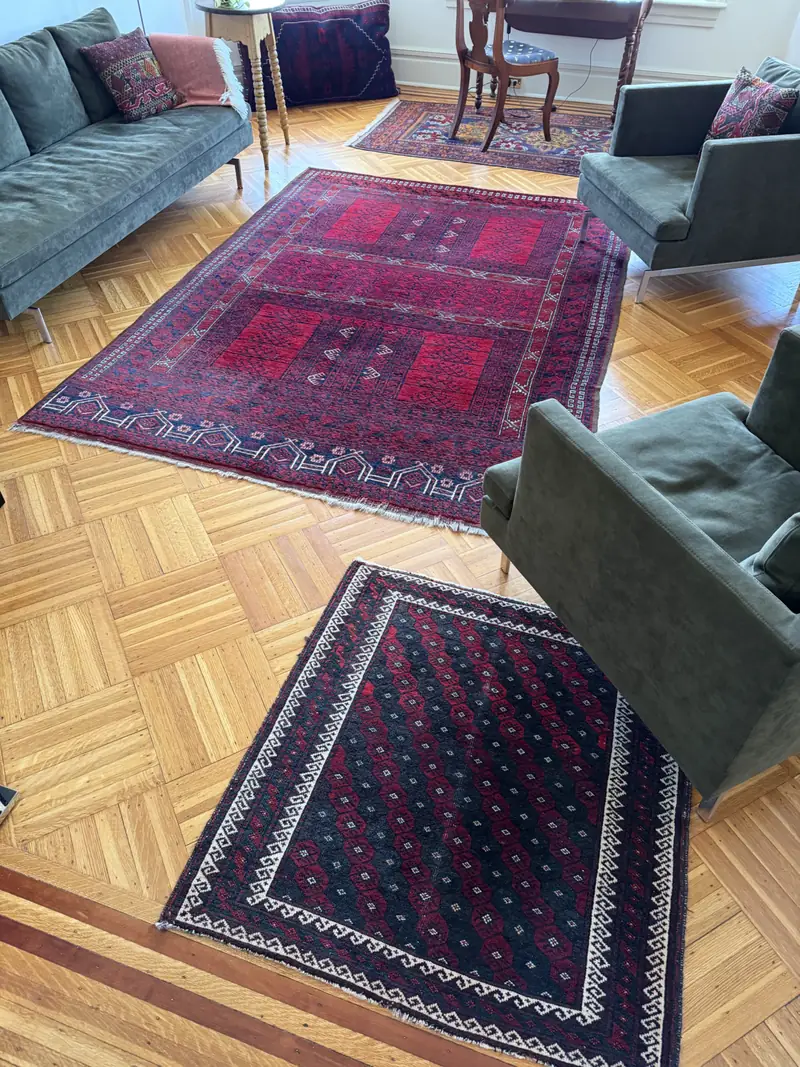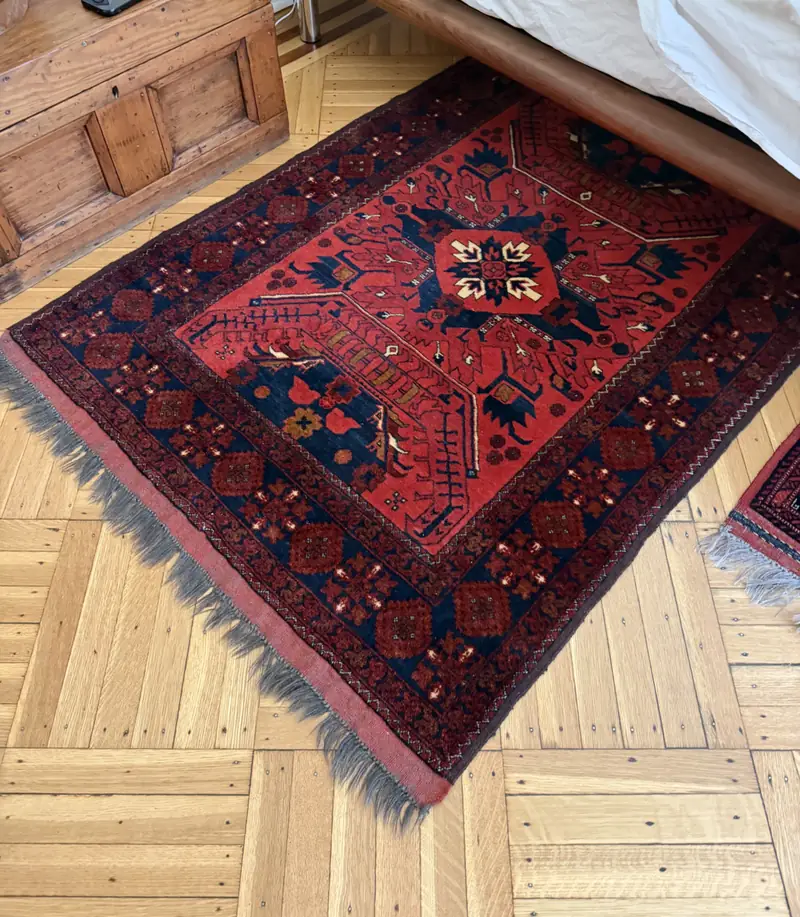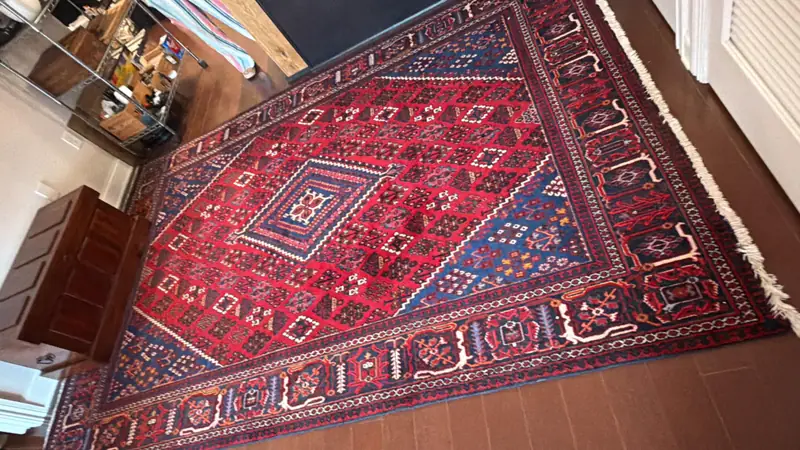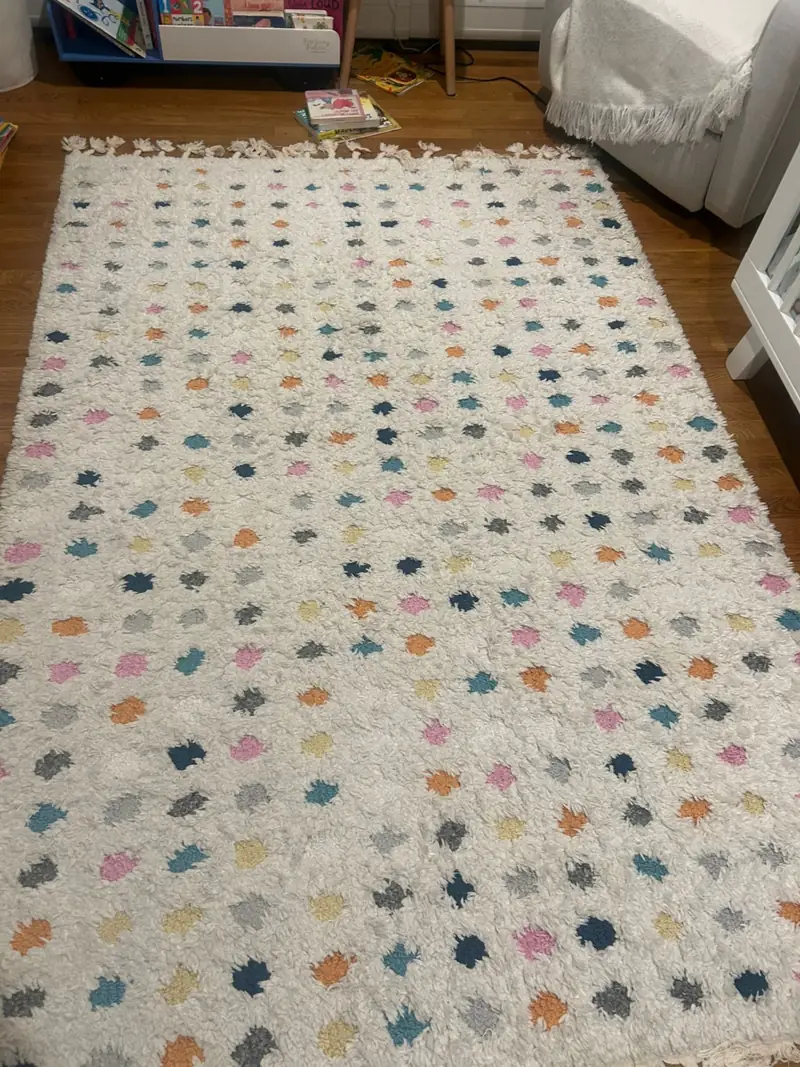
The best cleaning method for an area rug depends first on its fiber. Wool does well with a temperature-controlled immersion wash, silk needs low moisture and no friction, viscose needs even less water than silk, cotton flatweaves need careful dye checks, and jute, sisal and seagrass should stay as dry as possible. Synthetics tolerate the most, with one exception covered below.
Before you read on, find out what your rug is made of. The label on the back often says. If it does not, look for clues: wool feels springy and slightly dry, silk is cool and slippery with a strong sheen, viscose looks like silk but creases and flattens easily, and plant fibers feel coarse and stiff.
Wool: immersion with temperature control
Wool is the most common fiber in fine rugs and the most forgiving to clean. Its fibers carry natural lanolin and an outer layer of scales that sheds dry soil, so a wool rug often looks cleaner than it is. Underneath, grit collects at the base of the pile.
A wool rug in sound condition takes a full wash well. The method that suits it best is thorough dry soil removal, then immersion or a full wet wash in water kept at a moderate temperature, a wool-safe detergent rather than an alkaline one, a complete rinse, and fast, even drying. Heat combined with agitation makes wool felt and shrink, so hot water and hard scrubbing are the two things to avoid.
At home, vacuum regularly, blot spills with cool water, and keep steam cleaners off it. The wool rug cleaning process is built around these same limits.
Silk: low moisture and no friction
Silk is strong when dry and weaker when wet, losing roughly a fifth of its tensile strength when saturated. It takes dye beautifully and can release it quickly. Its sheen comes from a smooth surface that friction roughens, and once that happens the dull patch stays.
The right method for silk is low-moisture cleaning, section by section, with a silk-safe, pH-balanced cleaner applied sparingly and lifted out again by hand, never scrubbed. Every color is tested first. Drying happens in ambient air, without heat, which can make the fiber brittle.
At home, blot gently with a dry white cloth and stop there. Water alone can leave a ring on silk, so resist the urge to rinse a spot.
Viscose and other art silk: the most fragile pile
Viscose, also sold as art silk, bamboo silk or banana silk, is a regenerated cellulose fiber, not silk at all. It imitates silk's shine at a fraction of the cost, but it loses around half its strength when wet. Wet viscose pile crushes, mats and distorts, and it often yellows or browns if it dries slowly.
Cleaning viscose calls for the least water of any common rug fiber, with careful hand work and fast, controlled drying. Results are more limited than with wool, and matted traffic lanes may not recover their original look. It helps to know this before you buy one for a hallway.
At home, blot only with a dry cloth. Avoid water, steam and any upholstery cleaner.
Cotton and flatweaves: watch the dyes and the shape
Cotton appears as the pile on some rugs, as the full fiber of many dhurries and flatweaves, and as the foundation of most hand-knotted rugs. It holds up well in water, but two things need watching. Dyes on inexpensive cotton rugs are often unstable and bleed easily, and a flatweave with no pile to anchor it can shrink unevenly or pull out of square when wet.
The method here is a wet wash after a dye test, with attention to keeping the rug flat and square while it dries. Kilims and other wool flatweaves follow the same logic, with wool-safe products.
At home, a small cotton rug labeled as washable may go in a machine on a gentle cold cycle. Anything larger, or anything handmade, should not.
Jute, sisal and seagrass: keep them nearly dry
Plant fibers like jute, sisal and seagrass contain natural compounds that turn brown when the fiber gets wet and dries slowly. Water also makes these fibers swell and then shrink unevenly, which can leave the rug rippled or smaller than it was.
The safest method for these rugs is dry cleaning: thorough vacuuming, dry compound or barely damp spot work, and immediate drying of any area that gets damp. A full soak is rarely a good idea.
At home, scrape up solids, blot liquids at once, and dry the spot quickly with a towel and a fan. Do not use colored cleaners or anything alkaline.
Synthetics and blends: tolerant, with one caveat about backings
Nylon, polypropylene and polyester resist water and many stains, and they can usually handle a hot water extraction or a full wash. Polypropylene in particular repels water-based stains but attracts oily soil, so traffic lanes go gray even when spills bead up.
The caveat is construction rather than fiber. Many synthetic and wool-blend rugs are tufted, with a latex layer and a glued cloth back. Heavy wetting can soften that latex and let the pile separate from the backing. A method that suits the fiber can still harm the rug if the backing is weak, which is why area rug cleaning starts by identifying how the rug was made, as well as what it is made of.
At home, synthetics accept more aggressive spot cleaning than natural fibers. Still test any product on a hidden corner first, and rinse it out completely so no sticky residue is left behind.