
Pet Stain & Odor Removal
on Staten Island
Enzyme treatments that work deep into the fibers to break down pet stains and odors.
Arrange a pickup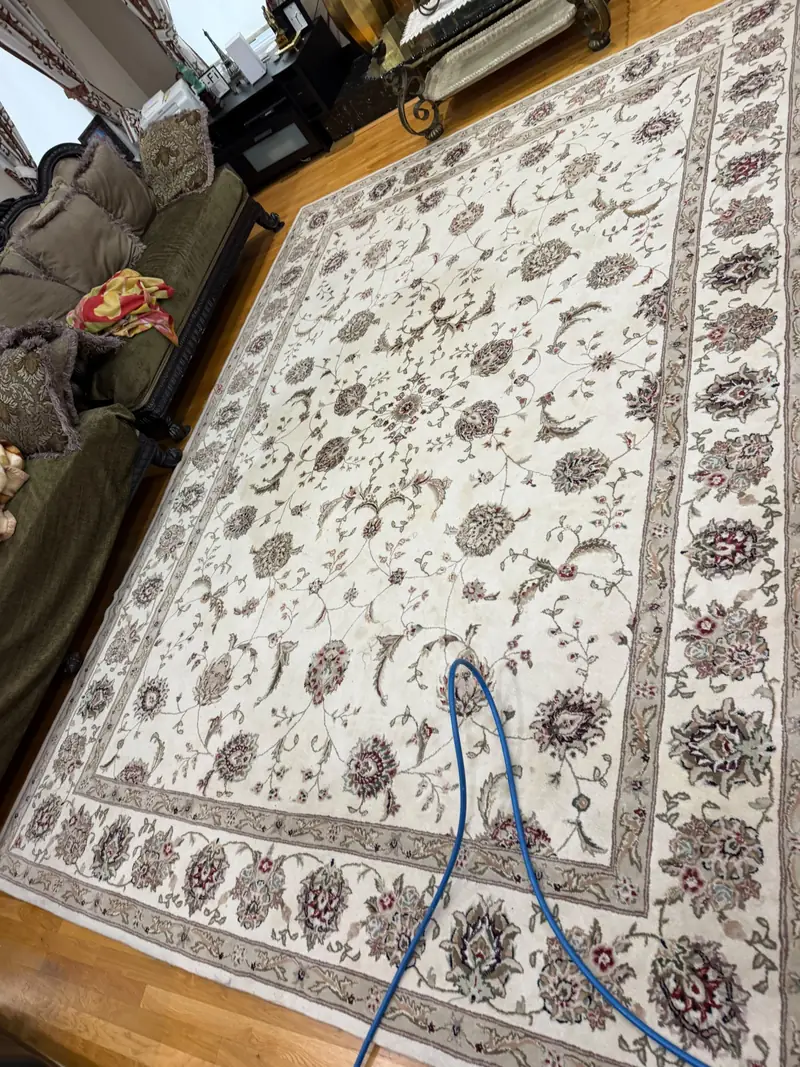 PHOTOGRAPHED BY OUR TEAM
Care begins with
understanding.
Pet accidents are one of the most common and challenging rug issues. Urine, in particular, penetrates deep into the pile, foundation, and even the floor beneath. Surface cleaning alone cannot resolve the problem. Our advanced enzyme-based treatments break down uric acid crystals, the source of lingering odor. Combined with deep sanitization and controlled drying, we address the stains and odors that surface cleaning leaves behind. We tell you before we start what can realistically improve.
We discuss the condition, recommended treatment and expected outcome with you. The appropriate method is selected after inspection; not every treatment is suitable for every rug.
Pet Stain & Odor Removal on Staten Island
Urine travels. It works down through the pile, fills the foundation, and then reaches whatever sits beneath, and the odor lives at the lowest level it reached, which is why a rug can smell clean for a week after a surface cleaning and then fill the room again. With 1970 as the median year built, the floor under a rug here is often wood or plywood over joists, and wood holds urine odor in its grain, so once the rug is out, check the spot beneath it; if the floor itself smells, it needs its own treatment, and no amount of rug cleaning will quiet the room while the source sits below. At collection, an ultraviolet lamp is passed over the rug to show up old deposits the eye would miss, so the treated spots are located rather than guessed at, and enzyme treatment goes after the uric acid crystals holding the odor, worked deep into those areas rather than sprayed over the surface. A deep fiber flush carries the breakdown products out, an antimicrobial step comes next, and the drying is managed so residue cannot creep back up into the pile as the rug dries. What cannot be undone: dyes that urine has changed keep that change, and wherever we come across it, you are told up front, before any work begins, with the options laid out for what the wash can and cannot do there. Until we come, press paper towels and a little cool water onto a fresh accident, and keep steam cleaners and ammonia off the rug, since heat sets what a spill has left and ammonia only adds its own smell to the pile. Tell us where the animal usually goes, so those spots are checked first under the lamp. If one corner has drawn repeated accidents, say how many you know of, because a spot soaked again and again can carry odor into the backing itself, and that changes which treatment is chosen. A rug that has already been through one round of odor work at another shop should be described that way too, since residues from a previous treatment interact with the enzymes used here.
- 78%of homes in one and two family houses
- 20%built before 1940
- 2floors in the median home's building
A careful
consideration.
- 01UV light stain mapping
- 02Enzyme-based uric acid treatment
- 03Deep fiber flushing
- 04Antimicrobial sanitization
- 05Controlled drying to prevent wicking
- 06Odor verification testing
Time for a closer look?
- Visible urine stains
- Persistent ammonia odor
- Repeated pet marking
- Vomit or fecal staining
- Discoloration around stain
- Bacterial contamination
Let's care for
something remarkable.
A favorite piece. A family heirloom.
A room that feels like you again.