
Pet Stain & Odor Removal
in Rye
Enzyme treatments that work deep into the fibers to break down pet stains and odors.
Arrange a pickup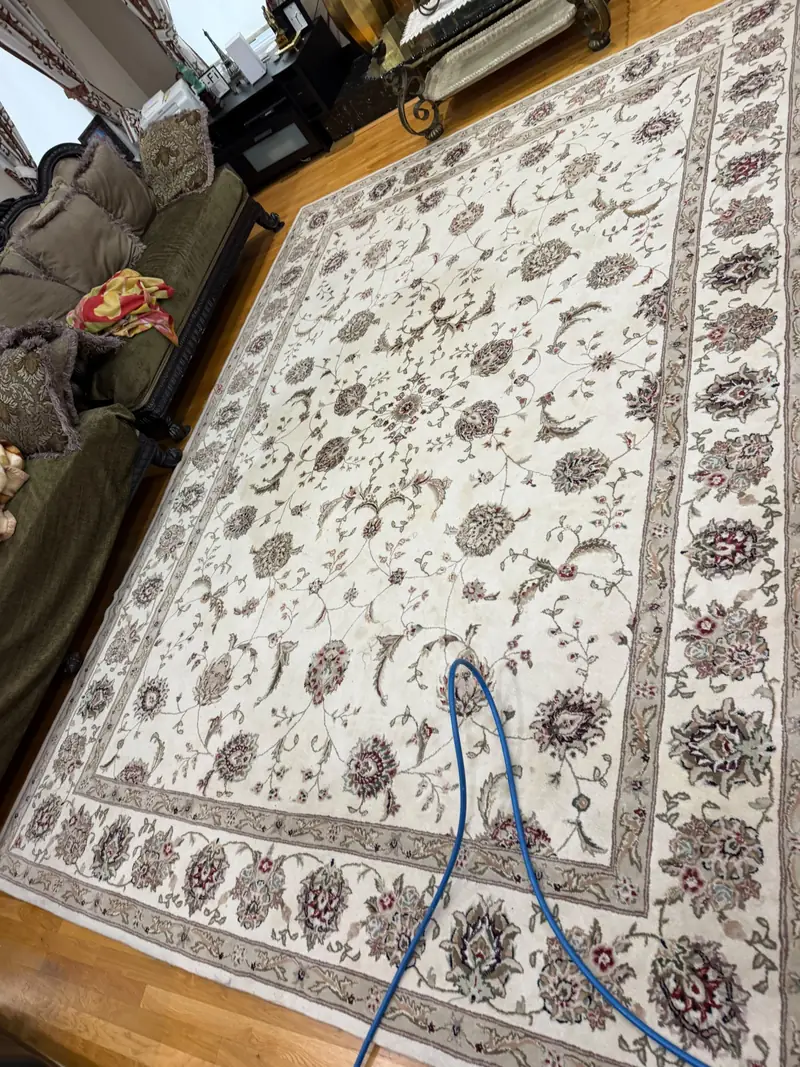 PHOTOGRAPHED BY OUR TEAM
Care begins with
understanding.
Pet accidents are one of the most common and challenging rug issues. Urine, in particular, penetrates deep into the pile, foundation, and even the floor beneath. Surface cleaning alone cannot resolve the problem. Our advanced enzyme-based treatments break down uric acid crystals, the source of lingering odor. Combined with deep sanitization and controlled drying, we address the stains and odors that surface cleaning leaves behind. We tell you before we start what can realistically improve.
We discuss the condition, recommended treatment and expected outcome with you. The appropriate method is selected after inspection; not every treatment is suitable for every rug.
Pet Stain & Odor Removal in Rye
Urine works its way below the pile into the foundation and can soak the pad and the floor too, so the smell survives a surface cleaning. Dyes it has altered stay altered, and we mark those spots with you before the work, so what the treatment can and cannot change is shared in advance. In Rye, with 1957 as the median year built, many houses have oak or pine floors under their rugs; when the rug is taken up, lift any pad that lay under the stain and look at the boards, and throw out a pad that smells, since a pad keeps giving the smell back to a clean rug. The work opens with ultraviolet light, which traces every area the urine has touched, among them rings that dried to a pale shade months back and remain unseen in ordinary light; the map sets how large a part of the rug the treatment has to cover. An enzyme treatment comes next and takes apart the uric acid at the heart of a stain, the part that keeps reacting long after it looks dry to the eye; a deep rinse then pushes through the fiber itself and carries the dissolved crystals out of the rug rather than sealing them in. An antimicrobial sanitization follows where the record of accidents calls for it, while the drying is held at a controlled pace to stop wicking, the movement that carries a stain from the foundation back toward the surface as a rug dries across its face. Odor verification testing comes last, performed once the rug is fully dry, since a smell that lifts while the rug is still damp may come back once the fiber has dried, and only a dried rug that passes its test earns the word done. Until pickup, dab a fresh accident with a white towel and cool water, blot it dry, and leave ammonia cleaners in the cupboard, since they set some stains and can bleach dyes. Tell us which kind of accident it was and how long ago, because a spot from days ago sits in the pile, one from weeks ago has reached the foundation, and an accident from months back has carried through to what lies beneath, and each takes a different treatment.
- 68%single family houses
- 30%built before 1940
- 70%owner occupied
A careful
consideration.
- 01UV light stain mapping
- 02Enzyme-based uric acid treatment
- 03Deep fiber flushing
- 04Antimicrobial sanitization
- 05Controlled drying to prevent wicking
- 06Odor verification testing
Time for a closer look?
- Visible urine stains
- Persistent ammonia odor
- Repeated pet marking
- Vomit or fecal staining
- Discoloration around stain
- Bacterial contamination
Let's care for
something remarkable.
A favorite piece. A family heirloom.
A room that feels like you again.