
Persian Rug Cleaning
in Jersey City
Deep expertise in Persian rug construction and dyes, cleaned according to region and fiber.
Arrange a pickup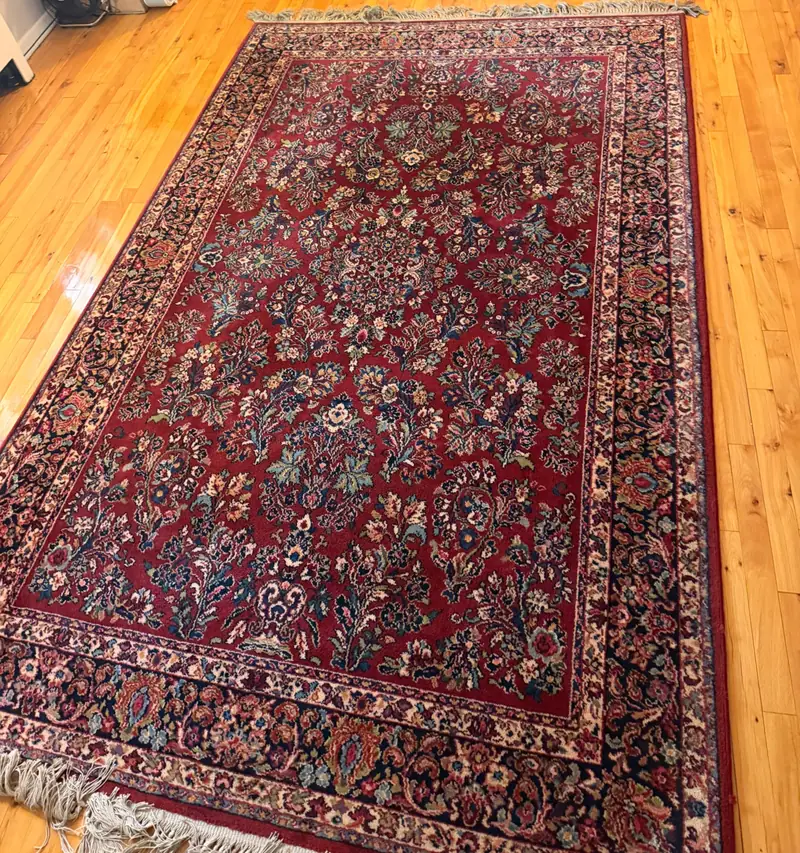 PHOTOGRAPHED BY OUR TEAM
Care begins with
understanding.
Persian rugs are among the world's most coveted textiles, each reflecting the tradition of its region, from the intricate florals of Isfahan to the bold geometry of Heriz. Our cleaning approach accounts for the specific knot density, dye type, and wool or silk composition of each Persian piece. We work to lift embedded soil and bring back color while preserving the rug's character.
We discuss the condition, recommended treatment and expected outcome with you. The appropriate method is selected after inspection; not every treatment is suitable for every rug.
Persian Rug Cleaning in Jersey City
A big Persian is long once rolled. Buildings of ten or more homes account for 45 percent of Jersey City's housing, and in one of them the rug goes down in the service elevator standing up. Measure the narrow side, because that width sets the length of the roll, and put both sizes on the tag. In a two family house the same rug is carried down the inside stairs, kept level the whole way. Persians are washed according to weave and region, with the dyes tested first, and a Persian that has been folded for years is relaxed and dried flat to ease its creases. Weave decides a great deal in this service. A coarse village weave such as a Heriz is heavy but forgiving, while a finely knotted city piece with a high knot count has more surface for its size and takes longer to rinse; both are Persians, and the wash is set accordingly, with the protocol chosen for the region and the natural dyes stabilized before the bath. A full immersion hand-wash follows where the dyes allow it, then several stages of rinsing, because soap left in a dense pile resoils quickly and dulls the wool. Drying happens flat, with air moving across the face, never hung, and the fringe gets its hand finishing once the rest is done. The roll is the first logistics question: a Persian of room size leaves a tower standing on end in the service car, and it leaves a two family house down the inside stairs kept level, so give us the width and the length when you book, along with the floor, and name any turn tighter than the rest. Under a dining table a Persian collects what meals leave behind: wine, oil, the fine crumbs that sift into the pile and turn rancid, which is the source of smells blamed on the rug itself. List what has been spilled and what was used on it, because some supermarket stain products set a wool stain or shift a dye, and the wash has a better chance with a stain that has been blotted and left alone. What the wash changes: soil held at the top of the pile lets go, and the difference shows first along the borders, where the pile has not been trodden and the original depth of the color is still there to compare against. Creases from years in a folded storage stay partly; the rug is relaxed and dried flat to ease them, and we say before the work how flat the old folds are likely to come back. If you know the rug's origin or hold an old appraisal, put it on the tag; a name for the weave is more use to the assessment than a guess.
- 14%single family houses
- 29%built before 1940
- 28%owner occupied
A careful
consideration.
- 01Region-specific cleaning protocols
- 02Natural dye stabilization
- 03Full immersion hand-wash
- 04Multi-stage rinsing
- 05Flat drying with air circulation
- 06Hand-finished fringe cleaning
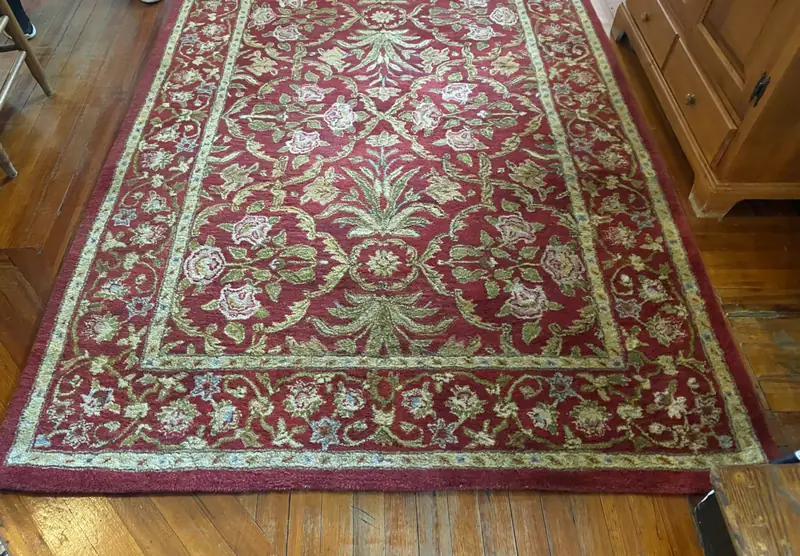
Time for a closer look?
- Color fading from sun exposure
- Deep-set soil in dense pile
- Fringe discoloration
- Food or beverage stains
- Pet-related damage
- Dust mite accumulation
Let's care for
something remarkable.
A favorite piece. A family heirloom.
A room that feels like you again.