
Persian Rug Cleaning
in Greenpoint
Deep expertise in Persian rug construction and dyes, cleaned according to region and fiber.
Arrange a pickup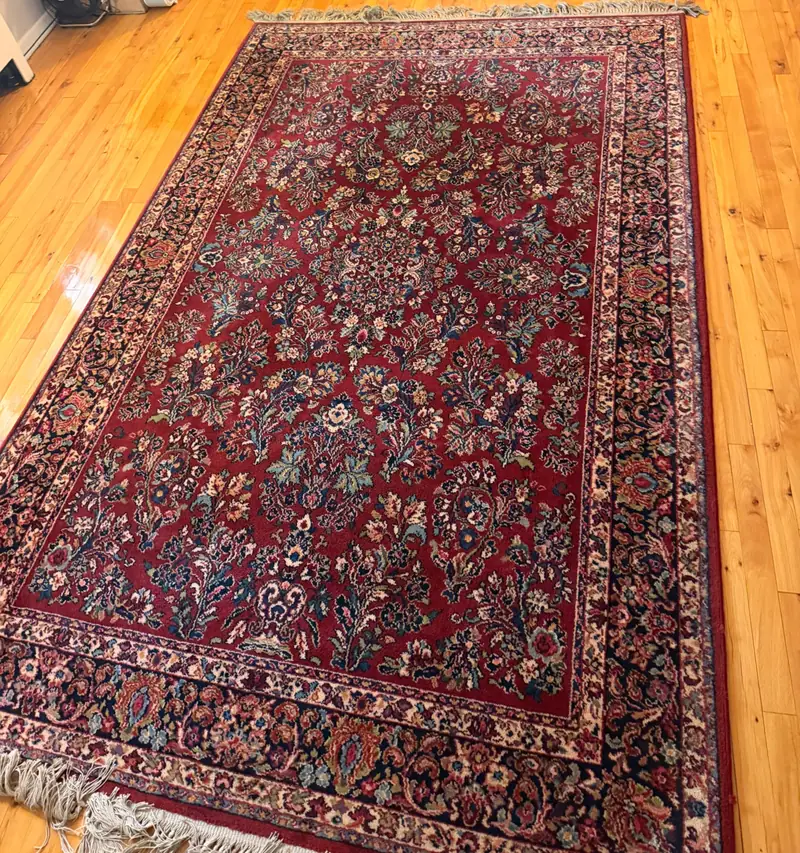 PHOTOGRAPHED BY OUR TEAM
Care begins with
understanding.
Persian rugs are among the world's most coveted textiles, each reflecting the tradition of its region, from the intricate florals of Isfahan to the bold geometry of Heriz. Our cleaning approach accounts for the specific knot density, dye type, and wool or silk composition of each Persian piece. We work to lift embedded soil and bring back color while preserving the rug's character.
We discuss the condition, recommended treatment and expected outcome with you. The appropriate method is selected after inspection; not every treatment is suitable for every rug.
Persian Rug Cleaning in Greenpoint
Many Persian rugs are knotted densely, and a dense weave makes a heavy, stiff roll. In a Greenpoint walk-up, where 44 percent of the neighborhood's homes are, a Persian often has to turn at a landing on its way out, so it is carried rolled and never folded to fit. Note the width and length, the floor and the way the stairs turn, and the carry is planned before the day. Before cleaning, a Persian is identified by region and fiber, because a silk highlight in the pile changes how the rug is washed. If you know yours has silk in it, say so when you book. The reading decides the bath: a fine Kashan or Nain, closely knotted with silk in its outlines, wants less water and a lighter hand than a heavy Heriz, whose stout wool and firm weave can take more. Where the colors come from natural dyes they are stabilized before the rug meets the water, and the wash is an immersion by hand that is rinsed until the water runs clear. Drying is done flat with air passing over the face, and the fringe receives its finishing by hand rather than cut, because on a knotted Persian that fringe grows out of the warp, and cutting it short takes from the body of the piece. A wet room size Persian weighs close to double what it does dry, and it is handled so the roll never presses on its own pile, which protects the wool at the edges. What the wash returns: soil settled deep in a tight knot count lifts out, and the field reads the depth the borders kept, because feet crossed the middle and left the edges alone. Spots from food or drink are handled ahead of the wash, each one matched to the dye involved. Wear stays where it is, and the assessment draws that line before any water is used. If the rug was ever cut down or refitted with new ends for a room, mention it, because a shortened piece has new ends that are checked before the wash.
- 44%of homes in walk-ups
- 57%built before 1940
- 4floors in the median home's building
A careful
consideration.
- 01Region-specific cleaning protocols
- 02Natural dye stabilization
- 03Full immersion hand-wash
- 04Multi-stage rinsing
- 05Flat drying with air circulation
- 06Hand-finished fringe cleaning
Time for a closer look?
- Color fading from sun exposure
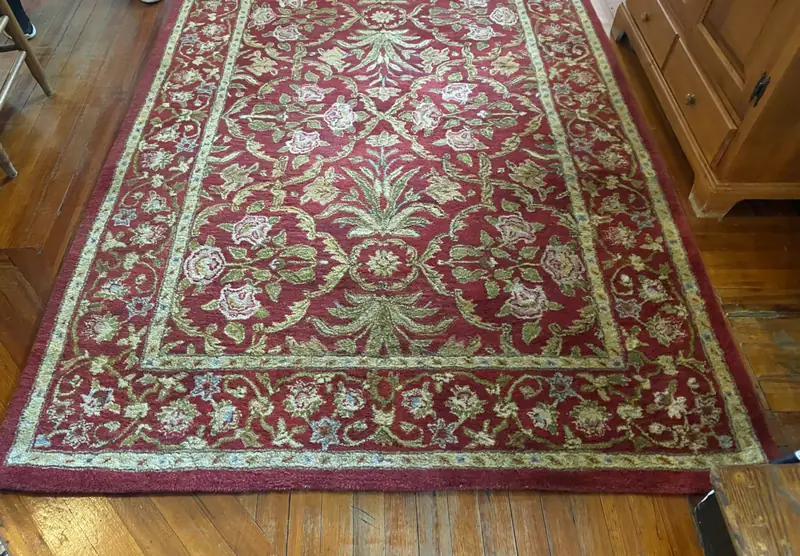
- Deep-set soil in dense pile
- Fringe discoloration
- Food or beverage stains
- Pet-related damage
- Dust mite accumulation
Let's care for
something remarkable.
A favorite piece. A family heirloom.
A room that feels like you again.