
Rug Sanitizing
in Brooklyn Heights
Sanitizing that reduces bacteria, allergens and dust mites without harming fine fibers.
Arrange a pickup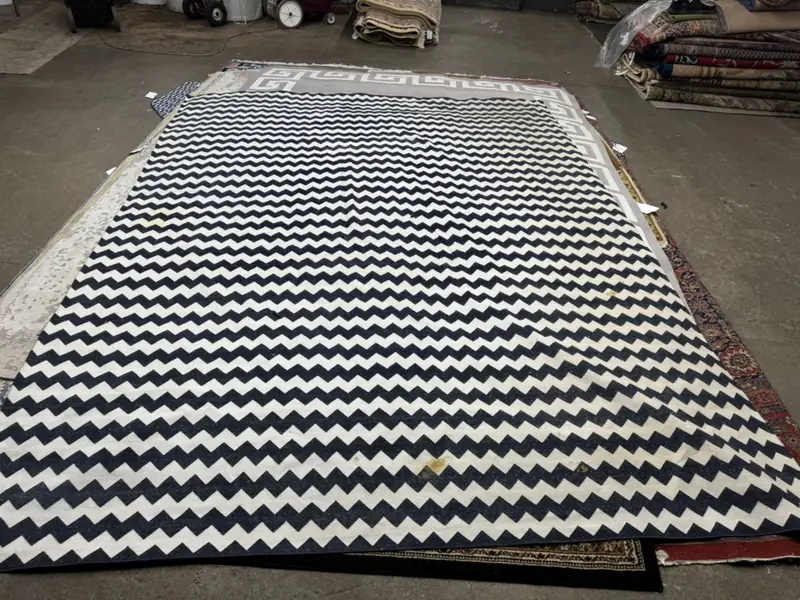 PHOTOGRAPHED BY OUR TEAM
Care begins with
understanding.
Rugs harbor bacteria, dust mites, pollen, and allergens that affect indoor air quality and health. Our sanitizing service goes beyond surface cleaning to reduce microscopic contaminants embedded deep within the fibers. Using sanitizing agents chosen for the fiber, we aim for a hygienically clean rug for homes with children, pets and allergies, while protecting the rug's texture and color.
We discuss the condition, recommended treatment and expected outcome with you. The appropriate method is selected after inspection; not every treatment is suitable for every rug.
Rug Sanitizing in Brooklyn Heights
Houses and walk-ups together make up 30 percent of local homes, and among the older ones a working fireplace is a common fixture, which makes hearth-side soot the opening chapter of many sanitizing jobs: the particles are greasy, they settle onto the rug nearest the fire, and a vacuum pass smears them across the pile rather than collecting them, because they cling. A sanitizing wash formulated for the fiber travels the full depth of the piece, drawing the soot out and dealing with the rest of what has accumulated down there: dust mites in the foundation, animal dander, pollen and the bacteria that colonize a rug which has never had a full wash. Agent selection is governed by the material, so wool tolerates one family of treatments, silk requires gentler chemistry, and a tufted piece with a glued back gets agents that leave the adhesive untouched; an ultraviolet alternative exists for rugs that no water process can touch. If anyone at home reacts to allergens, put that on the tag, because the treatment can be aimed squarely at allergen neutralization, and you will hear which agents fit the fiber before anything is applied. Odor arising from bacterial growth is addressed at its origin instead of masked, and the standard wash and dry follow afterward, so a sanitized rug returns smelling of clean wool rather than of perfume. A rug present during sickness in the household is sanitized much as bed linens would be, and it comes back fit for use. Cooking smells that have drifted up through a low building sit in the wool and leave with the wash itself, while dampness that has left mustiness in the foundation calls for the deeper route instead. Record on the tag where the rug has spent recent months and what it was near, because that history fixes the treatment before the piece is examined, and a rug that overwintered in sealed plastic follows a different path from one that lay open in a dry room.
- 51%of homes in elevator buildings
- 69%built before 1940
- 6floors in the median home's building
A careful
consideration.
- 01Antimicrobial deep treatment
- 02Allergen neutralization
- 03Dust mite treatment
- 04Fiber-safe sanitizing agents
- 05UV sanitization option
- 06Air quality improvement verification
Time for a closer look?
- Allergy flare-ups near rug
- Dust mite presence
- Post-illness deep clean need
- Mold or mildew concern
- General hygiene maintenance
- Odor from bacterial growth
Let's care for
something remarkable.
A favorite piece. A family heirloom.
A room that feels like you again.