Moths are kept away by light, movement and regular vacuuming, not by scent. Wool and silk fibers hold the protein that larvae feed on, and a rug left still and dark under a bed or sofa is the easiest place for eggs to hatch undisturbed. Pulling furniture out and vacuuming both sides on a regular schedule does more than any repellent sold for the purpose.
Why moths target rugs under furniture
Clothes moths and carpet beetles do not eat wool for the fiber itself. They are after keratin, the protein in wool, and the skin flakes, hair and food residue that settle into a pile over time. Silk and wool blends carry the same risk. Synthetic rugs are rarely touched because they lack that protein, though a wool fringe or wool binding on an otherwise synthetic rug can still draw larvae to the edge.
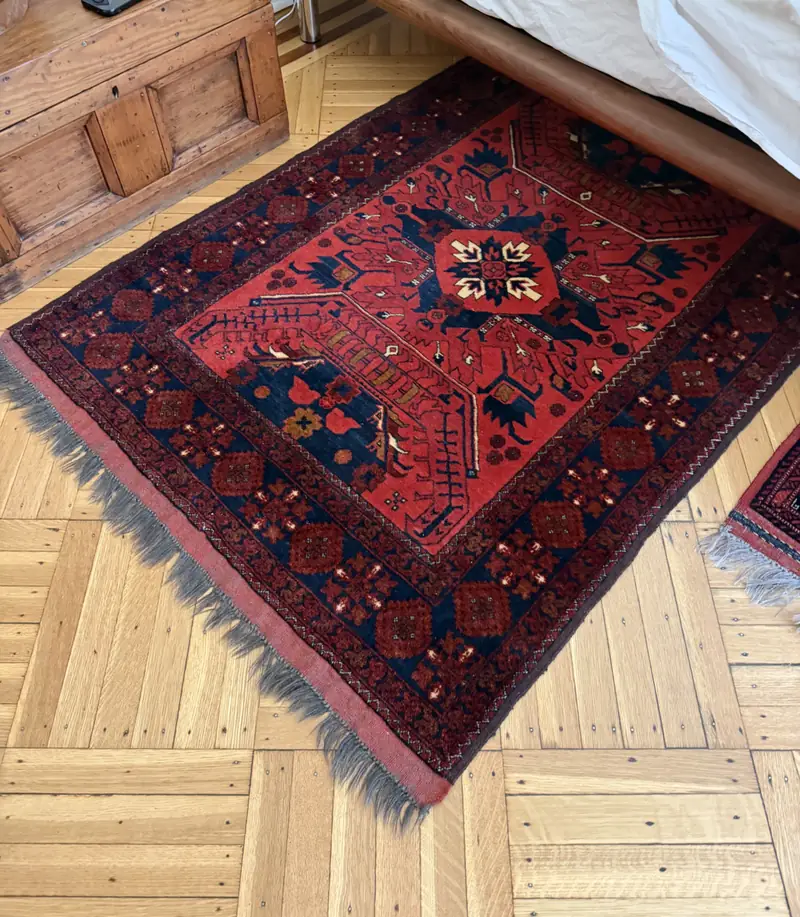
Larvae avoid light and vibration, so a rug that sits under a bed, a sofa or a heavy cabinet for months without being moved is the most exposed spot in a home. The same goes for a folded rug stacked in a closet, or a runner pushed against a wall where foot traffic never reaches.
Light, movement and vacuuming are the real prevention
The single habit that does the most work is disturbance. Every few months, pull furniture off the rug, shift the rug itself, and let light and air reach the spot underneath. Vacuum the front and the back with suction only, and pay attention to the edges and the fringe where larvae tend to collect. For hand-knotted and handwoven pieces, keep the beater bar off and work slowly so the knots are not stressed; this is one reason Wool Rug Cleaning is handled differently from a synthetic area rug.
A rug that is walked on, aired and vacuumed on a normal schedule is rarely a moth problem. The risk builds in the rooms that get the least attention, which is why a guest room or a formal dining room deserves the same seasonal check as a living room rug does.
The areas to check each season
- Under beds and bed frames, including the corners against the wall
- Under sofas, cabinets and any furniture that has not moved in months
- Rug edges and fringe pressed against baseboards or furniture legs
- Folded or rolled rugs stored in closets, including the fold lines
- Rug pads, which trap debris against the rug's underside
- Stacked rugs, where the middle layers get no light or air at all
Look for fine powdery frass, loose webbing, small bare patches in the pile, or irregular holes that do not follow the weave pattern. Moth larvae leave a distinct, casual-looking damage pattern that differs from wear, which tends to be even and follows traffic lines.
Rugs in closets and guest rooms
A rug that sits unused for a season is at higher risk than one in daily use, because nobody disturbs it. Guest room rugs, holiday rugs kept rolled in a closet, and seasonal pieces swapped out twice a year all fall into this category. Unroll and air them periodically rather than leaving them folded for months, and vacuum both sides before they go back into storage or onto the floor.
Why cedar and mothballs fall short
Cedar blocks and mothballs work as repellents, not as a cure. Their scent can discourage adult moths from landing in the first place, but the effect fades as the oil or the chemical evaporates, and neither one reaches eggs or larvae already settled deep in a dense pile. Mothballs also carry naphthalene, which can leave an odor in wool fibers that is hard to clear and is not something to place directly against a fine rug. Cedar oil needs reapplying often to stay effective, and neither substitute for removing the food source the larvae are after.
Cleaning before storage
The most reliable step before a rug goes into storage is a full cleaning. Washing removes the skin flakes, hair and oils that attract moths in the first place, along with any eggs or larvae already present. For a rug that shows signs of activity, Rug Moth Treatment combines a full cleaning with a treatment aimed at the fibers, which is a different process from a routine wash. Antique and vintage pieces need a gentler hand, which is why Antique Rug Cleaning is approached with low agitation and the condition of the foundation in mind before any treatment is applied.
Once a rug is clean and dry, store it rolled rather than folded, in a breathable wrap rather than plastic, and check on it through the season rather than leaving it untouched until it comes back out.
Questions people ask
Do moths damage synthetic rugs?
Rarely. Moth larvae feed on the keratin protein in wool and silk, which synthetic fibers do not contain. A synthetic rug with a wool fringe or wool binding can still see damage at that edge.
How often should I check under furniture for moths?
A seasonal check, two to four times a year, is a reasonable schedule. Move the furniture, vacuum both sides of the rug, and look for bare patches, webbing or fine powdery frass.
Can I put mothballs directly on my rug?
This is not recommended. Mothballs can leave an odor in wool fibers and only repel adult moths rather than treat eggs or larvae already in the pile. A cleaning that removes the food source is more reliable.
What does moth damage look like compared to normal wear?
Moth damage tends to show as irregular holes or bare patches that do not follow the traffic pattern of the rug, sometimes with webbing or casings in the pile. Normal wear is more even and follows where feet walk.
Should I clean a rug before storing it for a season?
Yes. Cleaning removes the skin flakes, hair and residue that attract moths, along with any eggs already present, before the rug sits undisturbed for months.
Is cedar enough to keep moths out of a stored rug?
Cedar oil can help repel adult moths while its scent lasts, but it fades over time and does not reach eggs or larvae already in the fibers. It works best alongside cleaning and periodic airing, not in place of them.
Arrange a pickup
Pickup and return are free in all five boroughs, Westchester, Long Island and New Jersey. Arrange a pickup, get a quote or call (888) 789-7001. A request is not a confirmed appointment: our team calls you to confirm the details.