Both can be used on a wool rug, but only with care. A diluted white vinegar blot can help with a fresh spot on colorfast wool, while loose baking soda is better suited to a quick deodorizing step than a stain treatment, since it tends to settle deep into the pile. Always test first.
What vinegar does to wool and to dyes
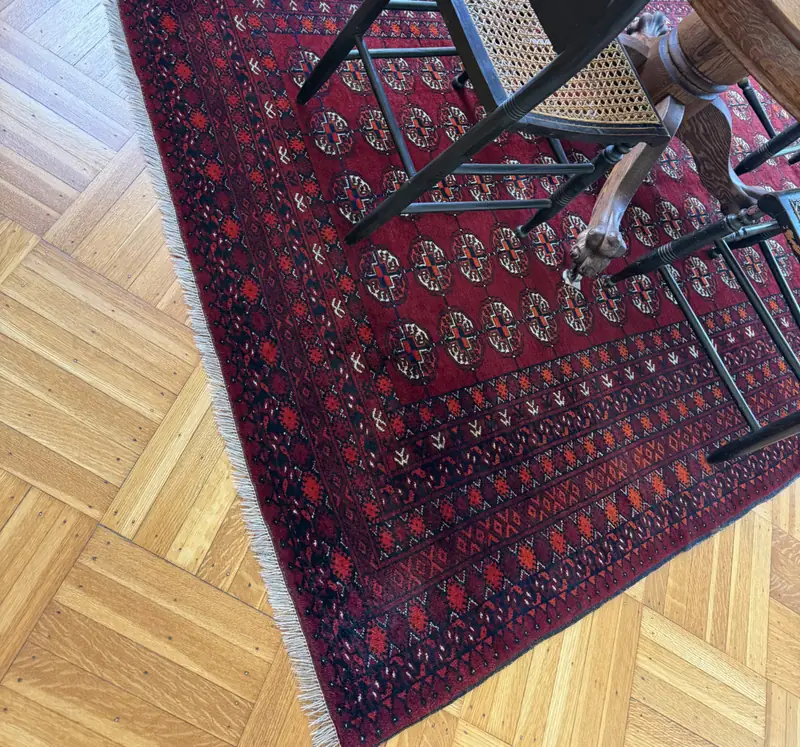
White vinegar is a mild acid, and wool is itself an acid-friendly fiber, which is one reason a diluted vinegar blot is sometimes recommended for fresh, water-based spots. The concern is the dye, not the wool. Many Persian and Oriental rugs use natural or early synthetic dyes that were never tested against household acids, and a vinegar blot can lift color along with the stain on a rug where the dye is already unstable. The only way to know is to test on a hidden corner, such as the back edge or under a fringe fold, and check a white cloth for any color transfer before treating a visible area.
What baking soda leaves behind
Baking soda is a mild alkali, and wool holds up less comfortably under alkaline products than it does under mild acids. Repeated use can leave the fiber feeling drier and duller over time. There is also a practical problem: baking soda is a fine powder, and a wool pile is dense. Vacuuming afterward pulls up what sits on the surface, but powder that has worked down toward the foundation threads is harder to recover fully, and what stays behind can attract more soil later or sit as a pale residue against darker wool. For odor control, a light dusting left briefly and vacuumed thoroughly, with repeat passes on both the face and the back of the rug, is a more cautious approach than working it in by hand.
When a diluted vinegar blot is reasonable
A diluted white vinegar blot, roughly one part vinegar to several parts cool water, is worth considering for a fresh, light, water-based spot on a wool rug with stable dyes, such as a drip of coffee or a muddy footprint caught early. Blot, do not rub, working from the outer edge of the spot toward the center so it does not spread. Blot again with plain cool water afterward to rinse the area, then press with a dry towel to lift moisture. This approach is not suited to oil-based stains, pet accidents, old or set-in stains, or any rug where the wool feels brittle or the pile is thin, since those situations call for an assessment rather than a home blot.
Always test in a hidden corner first
Testing is not optional on a rug with any value. Choose a spot on the back or under the fringe, apply a small amount of the diluted vinegar with a white cloth, wait a few minutes, and press a clean white cloth against it. If any color shows on the cloth, stop. That dye is not stable enough for home treatment, and further blotting elsewhere on the rug risks a bloom of color that is difficult to correct afterward. If the cloth stays clean, the method is reasonable to try on the actual stain, still in small amounts and always blotted rather than scrubbed.
Signs you should stop and call a professional
Stop if the water or vinegar brings color up onto your cloth, if the pile feels sticky or the colors look duller after drying, if the stain is old or has already set, or if the rug is hand-knotted, antique, or silk-blend rather than a straightforward wool pile. A rug with moth activity, a strong odor that persists after airing, or a stain that keeps reappearing after drying is also better handled with professional assessment than with repeated home attempts, since each attempt with an acid or alkali product adds to what the fiber has already absorbed.
What changes with professional wool cleaning
Wool Rug Cleaning starts with checking the fiber, the dye, and the construction before any product touches the rug, which is the step a home test can only approximate. A professional approach also controls moisture and drying far more closely than a kitchen blot can, which matters because wool that stays damp at the base of the pile is where odor and mildew take hold. For odor that has worked into the foundation rather than sitting on the surface, Rug Sanitizing addresses what a light dusting of baking soda cannot reach.
What improves after any treatment, home or professional, depends on the dye, how long the stain has been there, and whether anything was applied to the spot before. Old staining and certain dye reactions may not fully reverse, which is also true of professional cleaning in some cases, and an assessment is the only way to know what a given rug can realistically expect.
Questions people ask
Can I put baking soda directly on a wool rug stain?
It is better used for odor than for stains. Baking soda is a fine powder that settles into a dense wool pile, and working it directly into a stain makes it harder to vacuum back out fully. A light surface dusting, left briefly and vacuumed well, is the more cautious use.
Is vinegar safe for all wool rug colors?
No. Vinegar is a mild acid and some natural or early synthetic dyes are not stable against it. Test on a hidden corner with a white cloth first, and stop if any color transfers.
Should I mix vinegar and baking soda for a rug stain?
That combination is better left alone on a wool rug. The two react with each other in water, and the fizzing adds moisture and agitation to the pile without adding real cleaning benefit, which is not worth the risk on a fiber where dye stability is already a concern.
How do I know if my rug's dyes are stable enough to test?
Testing itself is the way to know. Apply a small amount of the diluted product to a hidden spot such as the back or under the fringe, press a white cloth against it, and check for color. There is no way to tell from looking at the rug alone.
What should I do if vinegar lifts color from my rug?
Stop immediately, blot the area with plain cool water to dilute what is there, and avoid rubbing. Let the rug dry away from direct sun and have the area looked at, since further home treatment on an unstable dye can spread the color further.
Arrange a pickup
Pickup and return are free in all five boroughs, Westchester, Long Island and New Jersey. Arrange a pickup, get a quote or call (888) 789-7001. A request is not a confirmed appointment: our team calls you to confirm the details.